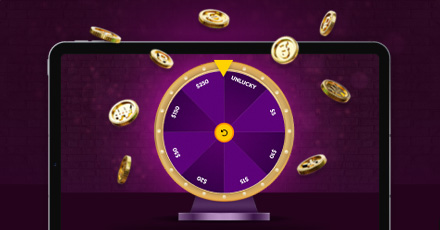
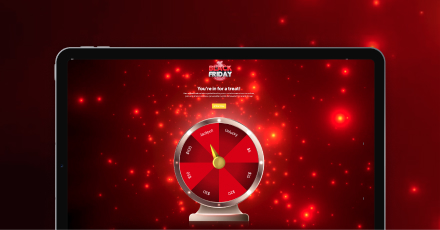
The appeal is straightforward. The user sees what to do, understands the action in seconds, and gets instant feedback. That makes it useful when attention is fragile, and the audience is not ready for a long explanation.
For lead gen, the key is not the wheel’s novelty. It is the clarity of the exchange. Spin for a chance to unlock an offer, gated content, event incentive, or priority follow-up. Keep the form light, the reward logic controlled, and the next step obvious.
Scratch card reveals
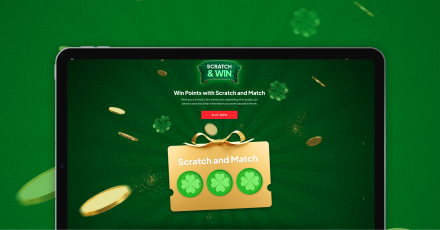
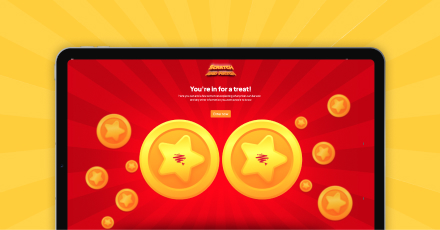
Scratch mechanics are effective when you want the visitor to feel they are discovering something rather than being sold to. That makes them useful for campaign landing pages, email reactivation, and event follow-up.
The commercial advantage is subtle but important. A scratch interaction slows the user down just enough to create involvement. It can make an ordinary incentive feel more considered, even when the offer itself is simple.
This is useful for opt-in campaigns because it moves the moInteractive lead generation is the practice of using participation, curiosity, and a clear value exchange to earn an opt-in, instead of relying on a static form alone. In practical terms, that often means using interactive promotions to turn a passive landing page or a paid social click into a moment of action.
For VP Marketing and demand generation leaders, that matters because attention is harder to win, paid media is more expensive to waste, and first-party data capture now has to feel earned. Marketers are still investing in websites, SEO, paid social, and conversion optimization, but the bar for getting someone to stop, engage, and share their details keeps rising. Salesforce’s latest State of Marketing is based on insights from nearly 4,500 marketers worldwide, while HubSpot’s 2026 State of Marketing draws on 1,700+ global marketers. Both point to the same pressure: teams need stronger data, better personalization, and more effective conversion paths, not just more traffic.
60-second view
- Static lead forms often ask for attention before they have earned it.
- Interactive lead generation works by offering a simple action and a visible payoff, which can make the value exchange feel more immediate.
- Formats such as Digital Spin Wheel, Scratch-Off, and Click to Reveal can help demand gen teams increase participation and capture opted-in first-party data.
- The goal is not more leads at any cost. It is better engagement, clearer consent, and stronger lead quality.
- BeeLiked fits as an interactive promotions platform for branded acquisition campaigns, not as a CRM or marketing automation replacement.
Why traditional lead capture loses momentum
Most lead capture journeys still follow the same pattern. A prospect clicks an ad, lands on a page, sees a headline, and then meets a form almost immediately. That can work when intent is already high. It works far less well when the audience is cold, distracted, or comparing six similar offers in the same hour.
The problem is not that forms are obsolete. The problem is that many teams use the form as the first act of the experience, rather than the final step in one. When every campaign asks for an email address, a job title, a company name, and a phone number before giving the visitor a reason to care, drop-off becomes predictable.
This is especially visible in top-of-funnel acquisition. Paid social, display, event follow-up, and awareness campaigns often generate interest that is real but shallow. A static landing page can struggle to convert that kind of attention because it offers little momentum. The user sees the copy, scans the page, and leaves.
That is one reason interactive lead generation is gaining traction. Instead of leading with the request, it leads with participation. The visitor does something first. They spin, scratch, or reveal. Then they decide whether the offer, reward, or next step is worth completing. The exchange feels more active and, when done well, more fair.
What makes a value exchange feel worth it
People do not opt in because a brand wants more records in its database. They opt in when the exchange feels clear, immediate, and proportionate.
That sounds obvious, but many campaigns still get the basics wrong. They ask for too much data, too early, tied to too little value. The result is a form that feels extractive rather than useful.
A stronger approach starts with three questions.
First, what is the user getting right now? That might be a chance to win, an instant offer, priority access, or a useful piece of content delivered in a more engaging format.
Second, is the action light enough to feel natural? The best top-of-funnel mechanics do not demand effort before interest exists. They create a small, easy commitment.
Third, is the data request aligned with the moment? A campaign aimed at awareness should not ask for the same level of detail as a bottom-of-funnel demo request.
This is where the first-party and zero-party data strategy becomes practical. Forrester’s guidance on collecting zero- and first-party data emphasizes aligning data collection with marketing goals, customer experience, privacy, security, and the broader tech stack. In other words, better data capture starts with relevance, not just form fields. Salesforce also defines zero-party data as information a customer intentionally and proactively shares, such as preferences or purchase intentions.
A simple example makes the difference clear. Imagine a product-launch campaign on paid social. The static version says, “Sign up to learn more.” The interactive version offers an instant reveal mechanic with a chance to unlock early access, a launch offer, or a useful download. Both may collect an email. Only one gives the visitor a stronger reason to engage first.
Which promotion mechanics work best for lead gen
Not every interactive format suits every campaign. For top-of-funnel demand generation, the strongest options tend to be simple, fast, and easy to understand on mobile.
Spin to win
A digital spin mechanic works well when the goal is to stop the scroll and create an immediate sense of possibility. For acquisition campaigns, it is often effective on landing pages, pop-ups, paid social follow-through, or seasonal traffic spikes.
ment from “fill out this form” to “see what you’ve unlocked.” That change in framing can improve participation without turning the experience into a gimmick.
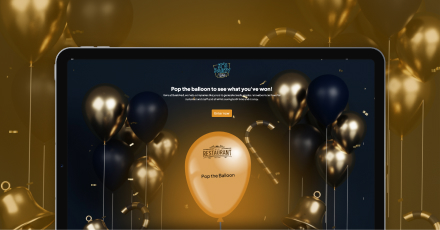
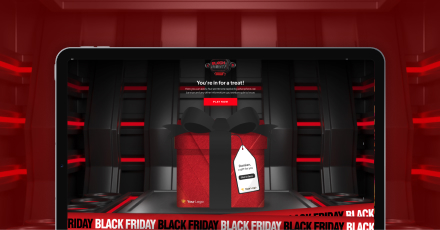
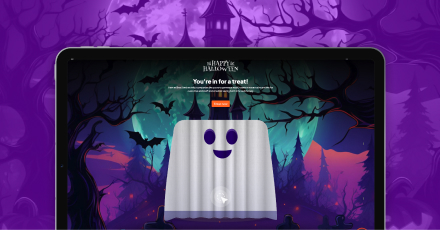
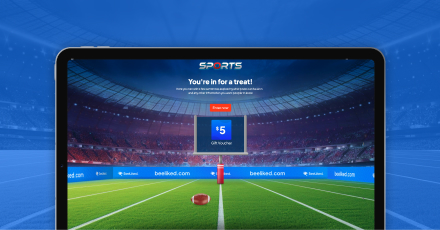
Click to reveal offers
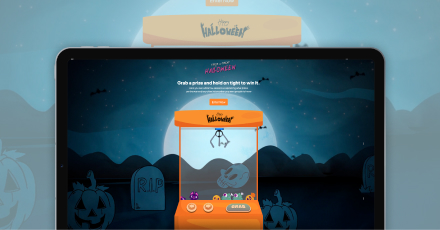
Reveal mechanics are often the cleanest option for B2B and higher-consideration brands. They are less playful than a wheel, more immediate than a long-form, and easier to align with launch offers, gated assets, or segmented messaging.
That makes them particularly strong for audiences who still want a more polished brand experience. A user clicks to reveal a benefit, tailored content path, or offer tier. You capture interest and learn something about intent from the option they choose.
For teams looking for lead generation ideas that feel more premium, this is often the best starting point.
How to protect lead quality, not just volume
A weak acquisition campaign can generate a spike in form completions and still create very little sales value. That is why gamified lead gen has to be judged on lead quality, not raw volume alone.
There are a few practical ways to protect quality.
Match the reward to the audience. If the incentive is too generic or too broad, you may attract people who want the prize but have no real fit. A B2B software campaign offering a highly relevant consultation, benchmarking, or exclusive-access signal will usually filter better than a generic consumer-style prize.
Keep the data request proportional. For a cold audience, name and email may be enough. Additional fields should earn their place.
Use progressive qualification. Let the first interaction secure the opt-in, then gather richer context through the follow-up sequence, preference collection, or segmented nurturing.
Measure beyond submissions. Track opt-in rate, form completion rate, source quality, downstream engagement, MQL progression, and sales acceptance. HubSpot notes that lead-to-customer conversion is one of the most important KPIs for marketers and that conversion rate optimization is among the most widely used optimization techniques. That is a useful reminder that better capture mechanics should still be tied to pipeline outcomes rather than vanity metrics.
A practical example: after an event, instead of sending attendees to a plain “book a follow-up” page, a brand could use an interactive offer reveal that routes respondents to different content or meeting paths based on their interests. The campaign still drives opt-ins, but it also gives the demand gen team cleaner intent signals.
Common campaign mistakes to avoid
The first mistake is treating the mechanic as the strategy. A spin wheel on a weak offer is still a weak offer. Interactivity helps when it sharpens the value exchange, not when it distracts from the lack of one.
The second is asking for too much data up front. Top-of-funnel visitors rarely want to complete a full qualification form just to access a simple offer.
The third is ignoring the post-opt-in journey. An interactive capture experience should connect cleanly to nurture, segmentation, remarketing, or sales follow-up. Otherwise, the campaign may create activity without moving leads forward.
The fourth is over-optimizing for reach and under-optimizing for fit. High participation can look impressive in a dashboard while creating little commercial value.
The fifth is treating the legal and promotion setup as an afterthought. If you run prize-led promotions, eligibility, disclosures, consent language, and local requirements matter.
Where BeeLiked fits
BeeLiked is an interactive promotions platform that supports branded acquisition campaigns and first-party data capture through controlled, incentive-led experiences. For this kind of top-of-funnel demand generation work, teams can use formats such as Digital Spin Wheel, Scratch-Off, and Click to Reveal as part of landing pages, pop-ups, paid campaigns, and follow-up journeys, while maintaining control over odds, rewards, access, and reporting. BeeLiked also supports CRM and marketing integrations, so the captured data can move into the systems that handle nurture and follow-up.
Just as importantly, BeeLiked should be positioned for what it is. It is not a full CRM. It is not a generic marketing automation platform. It is not a gambling product. It is a way to launch branded interactive promotions that can help marketers earn attention, support opt-in campaigns, and collect first-party data more effectively when the value exchange is designed well.
Where security and governance matter, we’ve got you covered as BeeLiked is ISO/IEC 27001:2022 and SOC 2 certified. That is useful for enterprise teams evaluating vendors for data capture and promotional experiences, but it should be treated as part of due diligence, not a shortcut around their own compliance review.
Decisions & next steps
If your current acquisition journey relies on static forms and generic offers, the decision is not whether to “add gamification” everywhere. It is where interactivity could improve the value exchange enough to earn better participation.
Start by identifying one top-of-funnel moment where attention is currently being lost. That might be paid social traffic, a campaign landing page, event follow-up, or a product-launch opt-in flow.
Then decide what action you want to earn. Is it an email opt-in, a content registration, a preference signal, or a follow-up request?
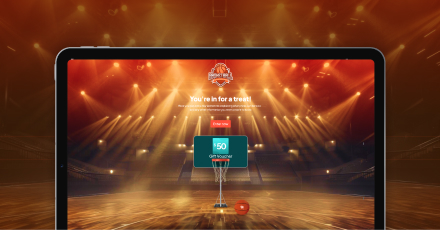
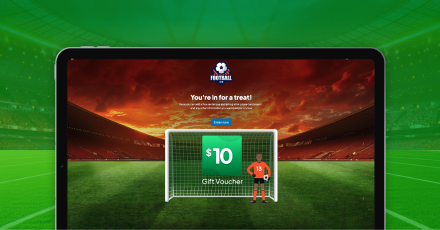
From there, choose the lightest mechanic that fits the brand and the moment. Spin for speed and broad appeal. Scratch for discovery. Reveal for cleaner, more premium journeys.
Finally, define success in commercial terms. Look at opt-in rate, lead quality, downstream engagement, and contribution to pipeline, not just participation.
For marketing leaders under pressure to create more engaging acquisition campaigns without adding needless friction, interactive lead generation is not a silver bullet. It is a more deliberate way to turn attention into action. And when the offer, audience, and follow-up are aligned, it can give static lead capture a stronger reason to work.