First-party data strategies work best when data capture feels like a fair exchange rather than an extraction exercise. The real challenge is not only reducing form fields. It is giving people a clear reason to opt in, participate, and share information willingly.
60-second view
As paid reach gets harder to rely on and consented data becomes more important, marketers are under pressure to collect better first-party data without making every campaign feel like a lead form. That is where the value exchange matters.
Most audience-acquisition friction arises when the ask is obvious but the payoff is vague. People are asked for details before they have seen enough value to justify the effort. A discount code can help, but it is not the only answer and is often not the most memorable.
This is why interactive promotions matter. They can turn passive data capture into a more active exchange, where a customer gives attention and consent in return for a branded, incentive-led experience. Used well, that can improve participation, make the opt-in moment feel more deliberate, and create cleaner paths for progressive profiling later.
For senior marketing leaders, the implication is simple. First-party data strategy is not just a data architecture question. It is also a campaign design question.
Why friction rises when value is vague

A lot of first-party data capture still follows a tired pattern. A paid social ad, site takeover, event follow-up, or launch page asks the audience to “sign up for updates,” “tell us more,” or “complete the form to learn more.” The marketer sees a sensible conversion path. The audience sees work.
That gap matters more now because expectations around relevance and trust are rising. Salesforce’s Tenth Edition State of Marketing says 84% of marketers are using first-party data, but only 31% are fully satisfied with their ability to unify customer data. That is a useful reality check. Collecting data is not the same as collecting data that people were motivated to share in a meaningful way.
The quality problem often starts at the point of capture. When the exchange feels weak, people give the minimum, abandon the form, or consent without real interest. That creates a database that looks larger than it really is. You may have more names, but not more useful intent.
There is also a broader trust issue. HubSpot’s 2026 State of Marketing Report emphasizes that trust, distinctiveness, and relevance are becoming more important as marketers try to scale without losing human connection. That is highly relevant to consent-based marketing. Audiences do not just decide whether to fill in a form. They decide whether your brand has given them a good enough reason to start a relationship.
So when friction rises, the problem is rarely the extra two fields alone. It is that the value on offer is not obvious, immediate, or differentiated enough to justify the ask.
The building blocks of a better exchange

The best first-party data strategies are built on a simple principle: ask for data in proportion to the value you give back.
That sounds obvious, but many campaigns still invert it. They front-load the ask and delay the payoff. Better campaigns do the opposite. They make the reward, content, or experience clear first, then ask for the minimum data needed to participate.
That value does not have to be a large prize or a heavy discount. In many cases, what the audience wants is not “more incentive” in the abstract. They want immediacy, clarity, and a reason to care. The exchange works better when it has four qualities.
First, it should feel relevant. Someone who clicks a paid social ad or scans an event QR code should understand why this interaction matters to them now.
Second, it should feel proportional. If you are asking only for an email address and consent, the reward can be light. If you want richer profile data, the exchange needs to justify it.
Third, it should feel low-friction. The path from attention to participation should be short, obvious, and mobile-friendly.
Fourth, it should feel trustworthy. The audience should understand what they are opting into and why the brand is asking.
HubSpot’s marketing trends research for 2025 and 2026 points to a market where audiences are overwhelmed by repetitive content and marketers need clearer, more differentiated ways to earn attention. In that environment, a better value exchange is not a nice extra. It is part of how the lead capture strategy stays effective.
Where interactive promotions help
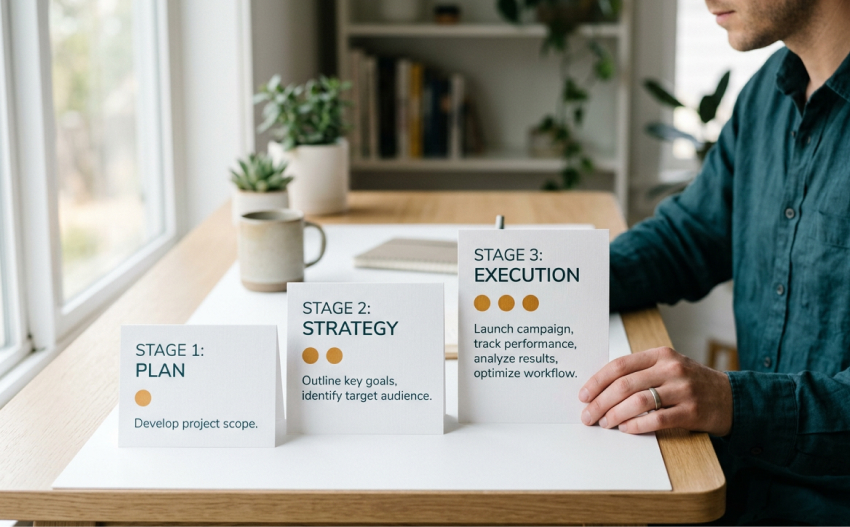
This is the practical role of incentive-led campaign design. Instead of treating data capture as a static hurdle, marketers can use interactive moments to make the exchange more visible and more engaging.
That does not mean every campaign needs a game mechanic. It means the mechanic can do useful work when attention is low, creative sameness is high, or the brand needs a cleaner handoff from awareness to opt-in.
Entry gating and consent
A common use case is a campaign landing page tied to paid social, display, influencer traffic, or event follow-up. The visitor arrives with some interest, but not enough to complete a dry form with no immediate payoff.
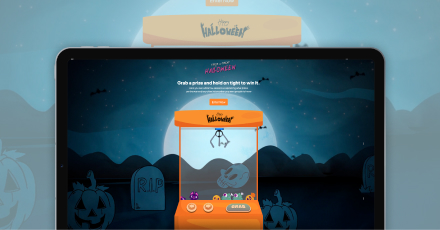
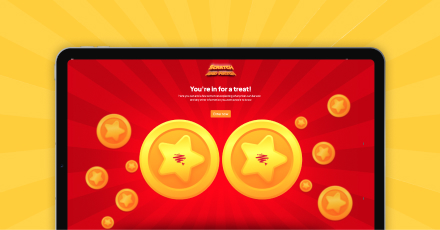
A format like Scratch-Off can give that audience a clearer reason to participate. The mechanic creates a brief moment of anticipation while the campaign collects the minimum required entry data and consent to unlock the experience.
Used well, this changes the tone of the exchange. The audience is not simply handing over details to access a generic follow-up. They are opting into a branded promotional moment with a visible value exchange.
This is especially useful in top-of-funnel and mid-funnel demand generation, where the main challenge is not always lack of awareness. It is low motivation to complete the next step.
Instant-win moments
Some audiences respond best when the value is immediate. That is where instant-win mechanics can help.
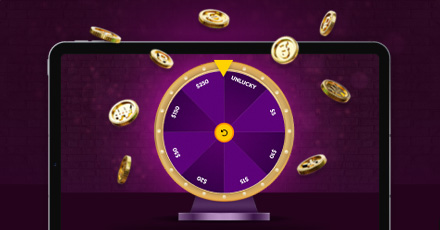
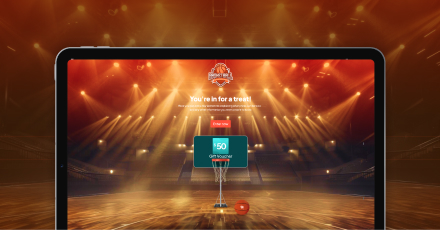
A format such as Click to Reveal works well when the marketer wants to reduce hesitation and create a quick, clear call to action. For example, a product launch campaign might use a reveal mechanic to capture opt-ins from visitors seeking access to an offer, early content, or a reward tied to the launch moment.
The strength of this approach is speed. The visitor does not need to read a long explanation to understand the interaction. They can see the exchange quickly, participate, and move into the next stage of the journey.
That can be valuable in awareness-to-opt-in journeys where the brand aims to convert fleeting attention into engaged engagement before the audience moves on.
Progressive data capture

The best value exchanges do not try to collect everything at once.
A first interaction may only justify an email address, region, and consent preference. Later interactions, once the audience has seen value, can capture more useful details over time. This is where progressive data capture becomes commercially smarter than a single heavy form.
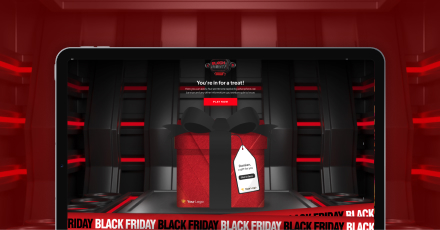
A format like Unwrap the Gift can work well in follow-up journeys, milestone campaigns, or nurture streams where the brand already has a basic relationship and wants to deepen it. The audience has already opted in. Now the task is to sustain participation and gradually enrich the profile without making the process feel administrative.
For example, a brand might use an incentive-led campaign after an event registration, after a content download, or around a seasonal product push. The first interaction earns consent. The next one earns preference data. Later moments can capture category interest, timing signals, or purchase intent in a more natural sequence.
That is often a better route to data quality than asking for every field on day one.
How to protect trust and data quality

The case for lower-friction first-party data capture is strong, but it only works if trust is protected.
The first rule is to be explicit about consent. People should know what they are signing up for, what communications they may receive, and how their data will be used. Hidden terms and vague opt-in language may increase short-term submission counts, but they usually weaken downstream value.
The second rule is to separate participation from over-collection. Just because a campaign can ask for more data does not mean it should. A stronger first-party data strategy is usually about collecting better data, not more fields.
The third rule is to control incentive logic carefully. Incentives can improve participation, but they should not encourage careless submissions, duplicate entries, or a flood of low-intent leads. Reward design, eligibility controls, and campaign rules matter.
The fourth rule is to think beyond the form-fill metric. If your campaign produces a large number of cheap opt-ins that never engage again, the exchange was not as efficient as it first appeared. Data quality should be judged by what happens after capture: engagement, conversion, profile completeness over time, and the ability to use the data meaningfully.
There is also a legal and compliance layer. This article is for general informational purposes only, not legal advice. Consent, disclosure, and promotion rules vary by market and campaign type. Teams should work with their own legal counsel to review campaign terms, opt-in wording, and promotional mechanics before launch.
Where BeeLiked fits
BeeLiked fits this problem as an interactive promotions platform that can support consented, incentive-led participation through branded campaign experiences. For demand generation teams, this is relevant when the goal is to improve the value exchange across audience acquisition, lead capture, and opt-in journeys without turning every campaign into a custom build.
In practical terms, BeeLiked can support branded promotional games of chance, configurable odds and reward controls, campaign-level eligibility rules, and workflow-based journeys connected to external systems through API or integration-led processes. That matters because a first-party data strategy does not live in a single landing page. It usually sits inside a wider operating model that includes CRM, paid media, nurture, and reporting.
BeeLiked’s role is not to replace that stack. It is designed to help marketers create more engaging participation moments within it, whether that is for campaign landing pages, event follow-up, product-launch attention-grabbers, or progressive-profiling journeys. Used well, the platform can help teams earn attention with controlled rewards and a clearer value exchange, while keeping the experience branded and measurable.
Where security and governance matter, we’ve got you covered as BeeLiked is ISO/IEC 27001:2022 and SOC 2 certified.
Decisions & next steps
If your current first-party data strategy still relies on long forms and vague lead magnets, start by reviewing the exchange from the audience’s perspective. What are they getting, how quickly do they understand it, and is the ask proportionate to the value on offer?
Then choose one acquisition or data capture journey where friction is clearly visible. That might be a paid social landing page, an event follow-up flow, a launch campaign, or a site-based opt-in moment.
From there, test a more active exchange. Use one incentive-led interaction, keep the first-step data ask minimal, and define what good performance looks like beyond submissions alone. Participation quality, consent quality, and downstream engagement should matter as much as volume.
Finally, build the data model progressively. First-party data strategies tend to perform better when they earn information in stages, not all at once. The brands that do this well are usually not the ones asking for the least. They are the ones making the exchange feel most worth saying yes to.