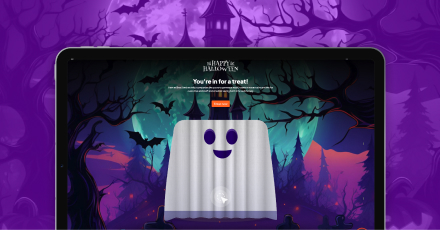
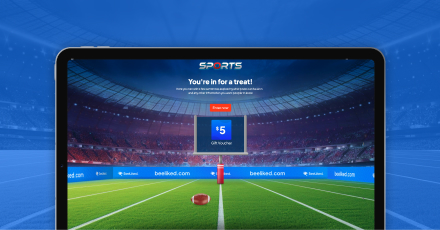
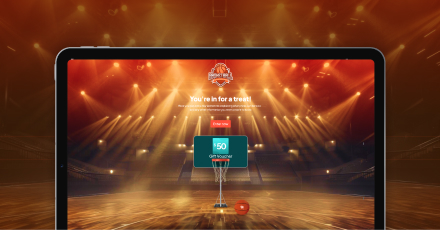
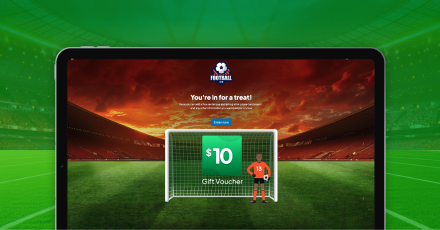
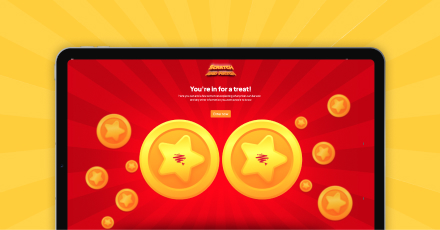
Holiday loyalty campaigns are retention programs designed to keep customers coming back during the year’s busiest shopping period. The best ones do not rely on a single festive email or a bigger discount. They create a repeatable reason to return, engage, and act.
60-second view
- December is crowded, and one-off holiday retention campaigns often get lost in the noise.
- Customers are more likely to stay engaged when a campaign creates a rhythm, builds anticipation, and provides a clear reason to come back over multiple days.
- Serial mechanics such as an Advent Calendar, Unwrap the Gift, or Click to Reveal can support repeat visits without turning every message into a discount blast.
- The strongest seasonal CRM programs control reward pacing, keep the experience visually consistent, and segment the audience instead of treating December as one generic promotion window.
- BeeLiked fits when CRM and loyalty teams want branded interactive promotions that support repeat participation across a holiday sequence, not just a one-time prize moment.
Why one-off festive emails rarely carry the season
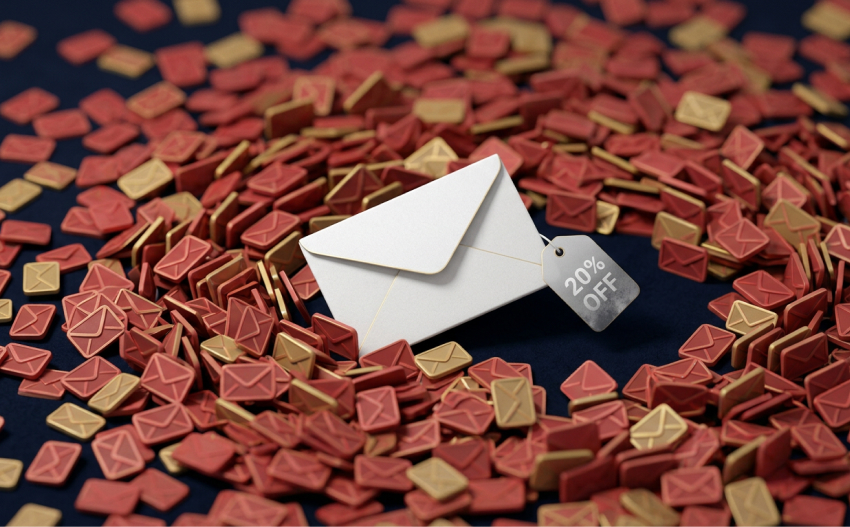
Most holiday retention campaigns fail for a simple reason. They ask for attention once, in a month when every brand is asking for attention constantly.
A single “holiday offer inside” email can still work for a highly engaged segment, but it rarely builds momentum on its own. It creates one moment, then disappears. For loyalty and CRM teams, that usually means the program becomes repetitive fast: one offer, another reminder, then a stronger offer. The only lever left is often the discount.
That is expensive and not especially memorable.
The bigger commercial issue is that customer expectations have moved on. According to Salesforce’s customer expectations research, 79% of customers expect consistent interactions across departments, 73% expect better personalization as technology advances, and 80% say the experience a company provides is as important as its products and services. Holiday retention is no longer just about getting one more send into the inbox. It is about making the overall journey feel joined up, relevant, and worth returning to.
That matters even more in December because attention comes in waves. Customers are checking for shipping deadlines, gift ideas, loyalty balances, last-minute add-ons, and post-purchase reassurance. Those are repeated attention windows. Teams that treat the season as a sequence can use those windows well. Teams that treat it as a single push usually end up shouting louder.
A practical example: imagine a beauty retailer trying to win back customers who bought during Black Friday last year but have been quiet since spring. A one-time 20% off email may create a short spike. A 12-day sequence that mixes entry points, surprise-and-delight rewards, and small reasons to return can create a very different behavior pattern. Instead of asking for one conversion, it builds a habit of checking back.
The psychology of return visits and anticipation

The strongest holiday loyalty campaigns work because they understand something simple about behavior: people return when they expect something new, relevant, or rewarding to happen next.
That does not always mean a large prize. In fact, large prizes alone are often the wrong mechanism for retention. They are good at creating a peak moment. They are weaker at building cadence.
What builds cadence is anticipation. One day unlocks the next. A customer feels there is a reason to check back tomorrow or later this week because the campaign has movement. That movement can come from a fixed daily reveal, a post-purchase reward moment, a small member-only surprise, or a sequence that varies by segment.
This is also where holiday loyalty campaigns differ from simple advent calendar marketing copycats. The visible mechanic is only part of the answer. The strategic value comes from how that mechanic structures behavior across time.
Research on personalization helps explain why this matters. McKinsey notes that 71% of consumers expect personalized interactions, and 76% become frustrated when they do not receive them. In holiday CRM, a serial campaign gives you more opportunities to make the experience feel timely and appropriate instead of generic. Day three for a dormant customer should not look the same as day three for a recent purchaser or a high-value member.
There is also a sequencing advantage. A one-off message has to do everything at once: attract attention, communicate the offer, explain the value, and drive the action. A multi-day campaign can spread that load. The first touch can create curiosity. The next can reward return behavior. The next can introduce a seasonal product nudge, a loyalty prompt, or a win-back incentive.
That is why structured, serial engagement often feels more premium than repeated batch-and-blast emails. It respects the idea that retention is built over a series of moments, not one announcement.
Designing a multi-day loyalty campaign

The best seasonal CRM programs do not need to be complex. They need to be deliberate.
A useful starting point is to design the sequence around one commercial job. Is this campaign meant to drive second purchase, reactivation, member engagement, or higher holiday visit frequency? Once that is clear, the mechanics become easier to choose.
Reward pacing
Poor reward pacing is one of the fastest ways to flatten a holiday campaign.
If everything valuable happens on day one, there is no reason to return. If the rewards feel so small that they do not justify the effort, people stop paying attention. If every day is a straight discount, the campaign teaches customers to wait for the next markdown.
A better model is controlled variation. Early days can focus on easy re-entry and low-friction participation. Mid-sequence moments can reward repeat engagement or trigger a second purchase. Later days can hold greater value for customers who have stayed active throughout the period.
That structure works well for several use cases:
A dormant customer win-back sequence might begin with a light-touch reveal, move into a member-only incentive, then offer a stronger nudge only if the customer re-engages.
A post-purchase holiday journey might start with a thank-you moment, then invite the customer back for a surprise reward a few days later, followed by an offer tied to replenishment or gifting.
A milestone campaign for top-tier members might use daily unlocks to reinforce status without relying on steep margin erosion.
The point is not to make every day feel bigger. It is to make every day feel purposeful.
Creative consistency
December campaigns often become visually chaotic because different teams, offers, and deadlines collide. Customers see a holiday sale email, then a loyalty message with different branding, then an app notification that feels unrelated.
Serial engagement works better when the creative system is stable. The customer should recognize the campaign immediately, even when the daily moment changes.
That does not mean every asset must look identical. It means the sequence needs a clear visual and editorial thread: the same seasonal concept, the same tone, the same reward logic, and the same promise of what returning delivers.
An Advent-style experience is effective partly because it makes this structure visible. The customer understands there is a designed sequence, not a random collection of messages. That coherence matters in seasonal CRM because it reduces friction. People know where they are in the journey.
Audience segmentation
This is where many holiday retention campaigns stop being strategic.
A multi-day sequence should not be sent to every customer in the same way. The same cadence can serve different audiences, but the content, timing, and reward logic should flex.
For example:
Recent purchasers may respond best to surprise-and-delight, light upsell, or gift-oriented follow-ups.
Dormant customers may need a lower-friction re-entry point and a clearer reason to come back quickly.
Loyalty members may value exclusivity, early access, or recognition more than a broad discount.
High-value customers may need fewer reminders but stronger relevance.
This is not only a customer experience issue. It is a budget issue. Controlled reward distribution works better when the campaign is aligned to behavior and value, rather than sprayed evenly across the file. BeeLiked’s own rulebook positions these experiences around controlled rewards, eligibility logic, automated execution, and CRM-triggered journeys, which is exactly the operational discipline holiday campaigns need.
What to measure across the sequence

If you measure a holiday loyalty campaign only on last-click revenue, you miss most of what makes it useful.
A serial campaign should be measured across the full sequence. That includes return behavior, engagement depth, and conversion patterns over time.
Start with four practical KPI groups.
First, measure repeat participation. How many people came back for day two, day three, or later moments in the sequence? This tells you whether the cadence itself is working.
Second, measure engagement quality. Opens and clicks still matter, but they are not enough. Look at interaction rate, completion rate, revisit frequency, and whether customers are moving from passive viewing into active participation.
Third, measure commercial progression. Did the sequence support repeat purchase, higher order frequency, member log-ins, profile updates, or reactivation among previously quiet segments?
Fourth, measure reward efficiency. Which incentives drove action without over-subsidizing behavior that would have happened anyway? Holiday retention is not just about giving customers something. It is about learning which types of value move which audiences.
This kind of sequencing mindset aligns with broader marketing pressure as well. In the tenth edition of Salesforce’s State of Marketing, Salesforce says it surveyed 4,450 marketers, and its related reporting notes that marketers are under pressure to innovate while improving connected, personalized experiences. Meanwhile, HubSpot’s 2026 marketing statistics roundup says blog posts remained among the top five highest-ROI content formats for marketers, a useful reminder that buyers still respond to clear, well-structured content and journeys rather than pure volume. For retention teams, that same principle applies inside CRM: quality of sequence usually beats quantity of noise.
Where BeeLiked fits

BeeLiked is an interactive promotions platform for brands that want to turn seasonal attention into structured participation, not just one-off clicks. For holiday loyalty campaigns, that matters because the job is rarely just “run a festive game.” It is to create a branded sequence that customers want to return to, while keeping reward logic, participation, and measurement under control.
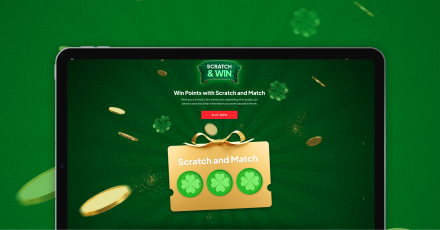
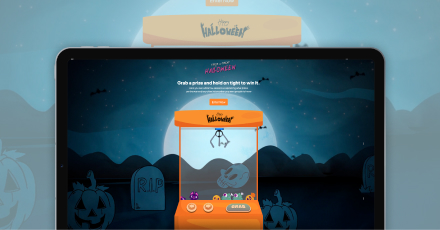
That can include branded multi-day experiences built around an Advent Calendar, chance-based moments such as Unwrap the Gift or Click to Reveal, and invite-only or CRM-triggered campaigns designed for specific segments. The value is not only the mechanic itself. It is the ability to structure cadence, control eligibility and rewards, and connect the experience to the wider retention journey in a way that feels coherent and commercially sensible.
If security or procurement teams are involved, then we’ve got you covered as BeeLiked is ISO/IEC 27001:2022 and SOC 2 certified.
Decisions & next steps
The shift for holiday retention is not from “no campaign” to “campaign.” It is from isolated festive messages to a designed sequence.
For CRM and loyalty leaders, the practical next move is usually straightforward. Pick one retention objective. Decide which audience matters most. Build a 7- to 12-day rhythm with a clear value exchange. Control the reward structure before launch. Measure repeat participation, not just final conversion. Then review what the sequence taught you about timing, relevance, and return behavior.
That approach is often more useful than another generic December discount burst because it creates a system you can learn from, not just a peak you hope to repeat.
For teams looking to add branded interactive incentives to retention, loyalty, or win-back journeys, BeeLiked can help create holiday experiences that are structured for repeat participation and built to fit the wider CRM program rather than sit outside it.