CRM campaign measurement should answer a simple commercial question: did the campaign change customer behavior in a way that matters? That sounds obvious, yet many teams still end up defending incentive-led CRM activity with open rates, click-through rates, and a handful of surface metrics that are too weak to prove real value.
Interactive, incentive-led CRM campaigns can do more than generate attention. They can create participation, reveal intent, trigger repeat actions, and generate clearer learning about what different customer segments respond to. The challenge is measuring them in a way that is useful to senior stakeholders, not just familiar to reporting dashboards.
60-second view
- Open rates can tell you whether a message got noticed, but not whether an incentive-led campaign created meaningful business value.
- Better CRM campaign measurement looks at a stack of signals: attention, participation, conversion, repeat behavior, and segment-level learning.
- Incentive-led campaigns often generate richer evidence than static campaigns because they create an explicit action, not just a passive impression.
- The most credible reporting combines campaign metrics with testing, holdouts where possible, and a realistic view of what can and cannot be claimed.
- For senior leaders, the goal is not to “prove everything” with perfect certainty. It is to show whether a campaign likely created incremental value, what it taught the team, and where to optimize next.
- BeeLiked helps CRM teams add measurable interactive promotions to retention, loyalty, and win-back journeys without turning the campaign into a complicated measurement exercise.
Why vanity metrics are not enough

Open rates survive because they are easy to track and easy to compare. The problem is that they are also easy to misread.
An open indicates that an email was marked as opened. It does not tell you whether the customer cared, understood the offer, engaged in the value exchange, or changed what they did next. Click-through rates move a little closer to real behavior, but they still sit near the top of the funnel. In an incentive-led CRM campaign, that is only part of the story.
This matters more now because CRM teams are under pressure to defend budget with stronger evidence. In Salesforce’s Tenth Edition State of Marketing, the company says the report is based on insights from nearly 4,500 marketers worldwide and frames the current environment around AI, data, and personalization. That is another way of saying measurement expectations are rising, not falling. Senior teams are expected to show not just that they sent campaigns efficiently, but that those campaigns contributed to retention, repeat purchase, or customer value over time.
There is also a customer expectation shift behind this. Salesforce’s overview of customer expectations says customers increasingly expect connected journeys, personalization, and trustworthy use of data. That changes the standard for CRM reporting. It is no longer enough to say a campaign performed well because it achieved a benchmark open rate. Leaders want to know whether the campaign was relevant, whether it influenced action, and whether it improved the next stage of the customer relationship.
The practical risk of vanity metrics is that they flatter weak campaigns and undersell better ones. A static reactivation email might achieve a decent open rate and do little else. A well-designed incentive-led campaign might generate a similar open rate but far stronger participation, redemption, or repeat purchase behavior. If you only report the first layer, you miss the difference.
A practical measurement stack for incentive-led CRM
A stronger framework for CRM campaign measurement does not need to be complicated. It does need to reflect how value is actually created.
Think in layers. Attention still matters, but it is the entry point, not the conclusion. From there, measure participation, movement toward conversion, repeat behavior, and the campaign’s impact on audience response.
Participation metrics

Participation is where incentive-led CRM campaigns often become more measurable than static messages.
A standard email can show opens and clicks. An interactive campaign can show whether a customer actively engaged with the experience itself. Did they reveal the offer? Did they play? Did they redeem? Did they return to complete the action after the first interaction? Those signals are more meaningful because they reflect an intentional step.
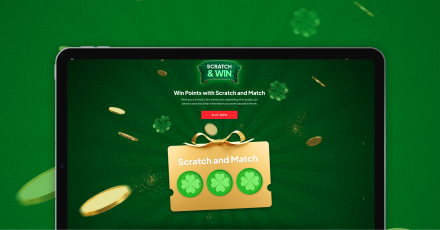
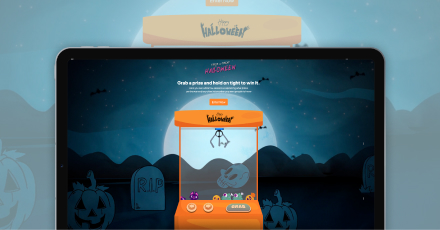
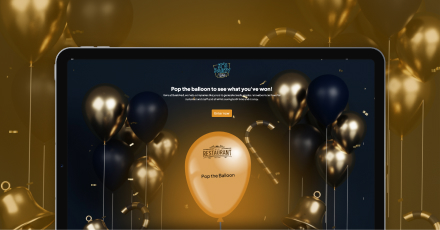
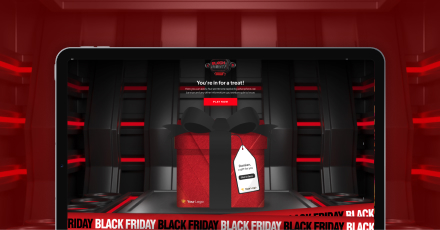
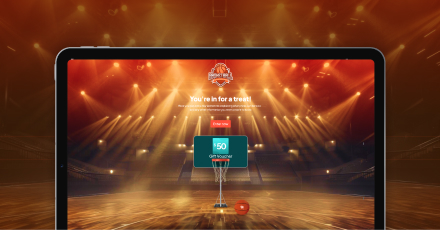
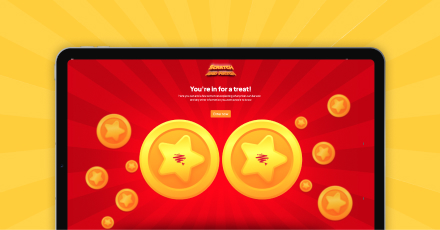
For a dormant-customer win-back campaign, participation might include the share of contacted users who interact with a Scratch-Off experience, the proportion who reveal a reward, and the proportion who proceed to redeem or browse. For a post-purchase surprise-and-delight moment, it might be the rate at which recent buyers engage with a Click to Reveal message and whether that interaction leads to a second purchase window opening sooner than expected.
These measures matter because they tell you whether the format created attention with intent, not just visibility. They also help separate campaign mechanics from audience size. A large audience with weak participation may tell you the campaign was broad but unconvincing. A smaller audience with strong participation may justify expansion.
This is especially useful when teams are deciding whether interactive formats deserve more room in the CRM mix. A richer participation signal gives you more to work with than “the email was opened.”
Conversion and repeat behavior
Participation is not the end goal. It is the bridge to commercial outcomes.
The next layer of measurement should look at what happens after the interaction. Did the customer purchase, repurchase, activate an account feature, complete a milestone, or move back into a healthier engagement state? For retention teams, the most useful measures often sit here.
That could mean the first purchase after a win-back journey, the second purchase after a post-purchase incentive, or the reactivation of customers who had gone quiet. It could also mean a softer but still important behavior, such as browsing a priority category, using a balance, or completing a profile step that improves later personalization.
The key is to avoid treating all conversions as equal. A one-time purchase from a heavy discounter and a repeat purchase from a previously declining customer do not carry the same strategic value. This is why good incentive campaign ROI conversations usually need both immediate conversion metrics and a view of what happens next.
For example, if a milestone-reward campaign drives short-term participation but no repeat behavior, that tells you something important about the quality of the response. If a repeat-purchase nudge leads to lower immediate volume but stronger 60-day repeat behavior among a high-value segment, that may be more commercially useful.
HubSpot’s coverage of marketing trends points to the continued rise of personalization and automation, including the expectation that content and journeys become more responsive. That makes repeat-behavior analysis more important, because the job of CRM is not just to generate isolated wins. It is to influence the pattern of behavior across the customer lifecycle.
Segment-level insight

Averages hide too much.
One of the biggest missed opportunities in gamified CRM measurement is failing to ask which audiences responded differently. Segment-level analysis often tells a more valuable story than campaign-level averages because it shows where the incremental effect is strongest or weakest.
A retention team might find that a win-back incentive works well for lapsed customers with historically high purchase frequency but has little effect on light buyers. A surprise-and-delight reward might perform best among recent first-time customers rather than loyal repeat buyers. A repeat-purchase incentive might help convert hesitant customers in one category while offering little extra value in another.
This is where incentive-led campaigns can become strategically useful rather than merely engaging. The campaign is not just producing responses. It is producing evidence about motivation.
That does not mean every campaign needs an advanced econometric model. It does mean reporting should go beyond top-line results. Break outcomes down by recency, frequency, customer value band, acquisition source, or previous engagement history where possible. That is how teams move from “the campaign worked” to “the campaign worked for this audience, in this context, with this kind of offer.”
Testing and control-group thinking

A good measurement framework becomes much stronger when it includes comparison.
The cleanest version is a control group. Hold out a comparable audience that does not receive the incentive-led treatment and compare downstream outcomes. That gives you a better view of incremental lift than raw campaign results alone. It is not perfect, especially in live CRM environments with overlapping messages and seasonality, but it is usually better than assuming all observed behavior was caused by the campaign.
Not every team can run a formal holdout every time. Even then, the habit of control-group thinking is still useful. Ask what the likely baseline would have been. Compare incentive-led versions against standard CRM versions. Test timing, audience, reward value, and mechanics rather than bundling every variable together.
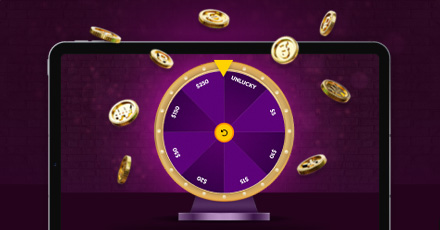
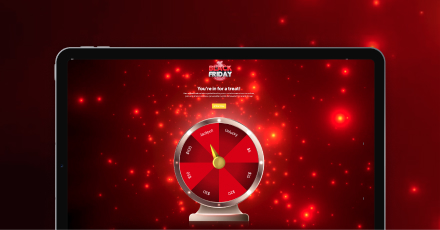
A new customer repeat-purchase journey is a good example. One group receives a standard follow-up email. Another receives an incentive-led version using Digital Spin Wheel. The goal is not to prove that one format is universally better. It is to understand whether the interactive format produced stronger participation, better conversion, or different repeat behavior for that specific audience and use case.
This is also the best protection against overclaiming. Without a comparison framework, teams can talk themselves into weak conclusions. With one, they can speak more credibly about likely incremental value and the limits of the evidence.
Communicating outcomes to senior stakeholders

Senior stakeholders usually do not need every metric. They need a credible narrative.
That narrative should move in a clear sequence. What was the business problem? What behavior was the campaign designed to influence? What happened at the participation level? What happened at the conversion or retention level? What did the team learn, and what decision follows from that learning?
This is where many CRM reports lose the room. They lead with channel metrics and make business impact feel secondary. A better structure starts with the commercial objective and uses campaign data to support it.
For example, the campaign was designed to reactivate dormant customers without relying on broad discounting. It generated a stronger participation rate than the team’s standard win-back format, with the strongest response among mid-value dormant customers. Conversion improved modestly, but repeat behavior was strongest in one product category, suggesting a more targeted version is worth testing next quarter.
That is more useful than leading with open rate movement.
It also helps to show confidence levels honestly. Some outcomes are clear. Others are directional. Senior leaders usually respond well to that as long as the team is precise. The aim is not to sound certain about everything. It is to show disciplined thinking and commercially relevant learning.
Where BeeLiked fits
BeeLiked fits where CRM and lifecycle teams want more engaging campaign formats and clearer participation signals within retention, loyalty, and win-back journeys.
That could mean an incentive-led reactivation campaign, a milestone reward moment, a post-purchase surprise-and-delight message, or a repeat-purchase nudge that gives customers a more active reason to re-engage. BeeLiked’s role is not to replace CRM strategy, attribution models, or broader customer analytics. It helps teams add measurable, branded promotional moments that generate stronger engagement signals than static messages alone.
Because BeeLiked is built around controlled reward experiences, it can support campaigns where teams want to manage reward logic, budget exposure, and customer experience with more precision than a generic message provides. That makes it useful for teams trying to balance attention, incentive cost, and measurable response.
For organizations reviewing data handling and governance, BeeLiked is ISO/IEC 27001:2022 and SOC 2 certified.
If promotion-law or reward-structure questions arise, those should be treated as general program considerations rather than assumptions. Teams should consult their own legal counsel before launching any promotion or rewards program, particularly where market-specific rules apply.
Decisions & next steps
If your current CRM campaign measurement still leans heavily on opens and clicks, the first step is to decide whether those metrics are actually helping you defend investment or simply filling a dashboard.
Review your last few incentive-led campaigns and map them against a fuller measurement stack. What did you measure for attention? What did you measure for participation? Which conversion or repeat-behavior signals mattered most? Where did you learn something useful at the segment level?
Then choose one journey to improve. A dormant-customer reactivation flow is often a good candidate because the baseline is clearer and the commercial question is simple: did the campaign move people back into action who would otherwise have remained inactive?
Build the next test with comparison in mind. Keep the objective narrow. Define the key behavioral outcome before launch. Decide what counts as participation, what counts as value, and what would justify scaling the approach.
For CRM and lifecycle teams looking to add branded interactive incentives to retention, loyalty, or win-back journeys, BeeLiked offers a practical way to create measurable campaign moments that go beyond passive email responses and give teams a stronger basis for optimization.