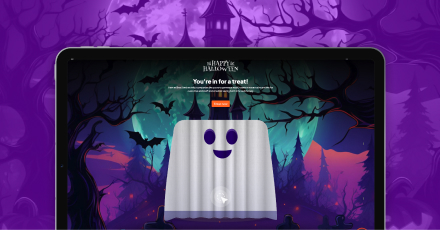
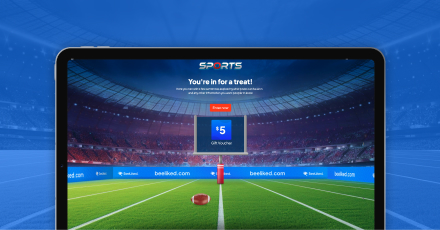
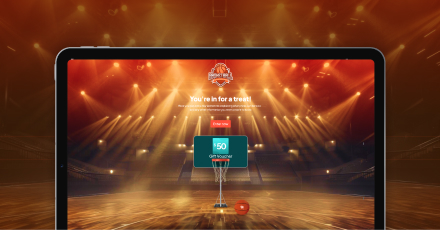
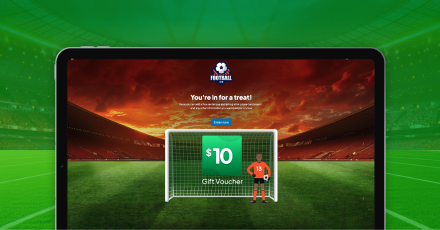
Customer win-back campaigns are designed to re-engage people who have stopped opening, browsing, buying, or responding. In practice, that means giving dormant customers a reason to notice your brand again and making the return feel worth their attention.
60-second view
Dormant customers are not just a lapsed audience. They are often a large, underused revenue pool sitting inside the CRM. The problem is that many reactivation campaigns still rely on familiar “we miss you” emails, blunt discounts, and generic reminders that are easy to ignore.
A better approach is to treat reactivation as an attention problem first. Before a customer can reconsider your offer, they have to notice it. That is where chance-based interactive promotions can help. Used carefully, they create curiosity, give the customer a reason to click, and make the return experience feel different from the last five messages they ignored.
That does not mean every win-back campaign needs a game mechanic. It means stale flows often fail because they ask for action before they have earned attention. Chance-based rewards can help bridge that gap when they are tied to sensible segmentation, controlled reward logic, and practical measurement.
Why most win-back flows feel invisible
Most dormant-customer engagement programs fail not because the audience is impossible to win back. They fail because the campaign looks and sounds like every other retention message in the inbox.
The typical pattern is familiar. A customer has not purchased for 60, 90, or 180 days. The brand sends a reminder, then a discount, then a final nudge. Sometimes the offer changes, but the structure rarely does. From the marketer’s side, it feels logical. From the customer’s side, it often feels repetitive and easy to skim past.
That matters because customer expectations have moved on. Salesforce says 73% of customers expect better personalization as technology advances, while 65% expect companies to adapt to their changing needs and preferences. At the same time, 61% say most companies still treat them as a number. That is a useful summary of the reactivation problem: many campaigns are technically targeted, but they do not feel meaningfully different to the person receiving them. Salesforce’s customer expectations research
There is also a fatigue issue. Salesforce’s State of Marketing Report says 83% of marketers recognize the shift toward personalized, two-way messaging, yet only 25% are satisfied with how they use data to power those moments. That gap shows up clearly in win-back work. Teams know dormant customers need more relevance, but many programs still default to static messages because they are easy to send.
A dormant segment is also rarely one thing. Some customers are low-frequency but still interested. Some have drifted because the product was seasonal. Some bought once during a promotion and never built a habit. Others may still like the brand but no longer pay attention. Sending the same passive offer to all of them usually produces exactly what it deserves: limited attention and shallow response.
Why chance and curiosity can improve attention
A win-back campaign does not begin with conversion. It begins with an interruption.
That is the part many reactivation campaigns miss. Before you can talk about margin, offer design, or repeat purchase, you need a customer to stop scrolling, open the message, click through, and feel that this interaction is worth a few seconds of attention. Chance-based rewards can help because they change the shape of the experience.
Instead of presenting a dormant customer with another static discount, you present a moment of possibility. The customer does not just read an offer. They reveal it. They play for it. They uncover what is available to them. That subtle change matters because curiosity can do work that a plain message often cannot.
This aligns with the broader direction of modern lifecycle marketing. In Salesforce’s latest marketing research, marketers are under pressure to deliver more personalized, more conversational engagement rather than one-way broadcast messaging. A chance-based mechanic is not personalization on its own, but it can make a reactivation touchpoint feel more active, more timely, and more worth opening than a standard coupon email.
It also helps address a practical inbox problem. Optimove’s 2025 Consumer Marketing Fatigue Report argues that email remains an important attention channel, but overused, one-size-fits-all messaging creates fatigue and undermines engagement. That is highly relevant for customer win-back campaigns. Dormant customers are often the ones most likely to ignore routine messages. A fresh mechanic will not fix poor targeting, but it can improve the odds that the campaign earns a second look.
The commercial point is simple. Reactivation is not only about giving money away. It is about creating a reason to re-engage. Chance-based rewards can do that when the experience is well timed, the segment logic is sound, and the value exchange feels proportionate.
Best-fit mechanics for reactivation
Not every chance-based format works equally well for every dormant segment. The right mechanic depends on what you need the customer to do next and how much friction the moment can tolerate.
Spin to win
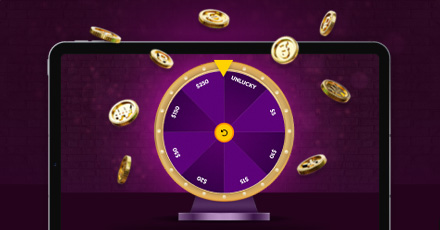
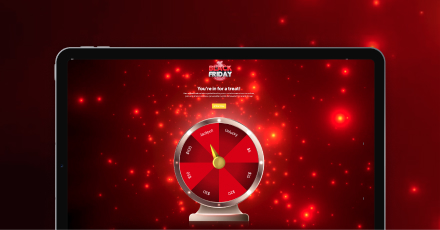
A Digital Spin Wheel works well when the main objective is click-through and immediate attention.
This format suits broad dormant audiences where the first challenge is simply getting the customer to engage again. For example, a retailer might send a reactivation email to customers who have not purchased in 120 days, inviting them to return and reveal a reward. The reward could range from free shipping to a modest percentage discount to bonus loyalty points, depending on the margin logic and customer history.
The advantage here is speed. The mechanic is instantly understandable, and the customer gets feedback right away. That makes it useful for audiences that have already ignored more conventional campaigns. It is also helpful for post-purchase surprise-and-delight moments where the goal is to encourage the next visit before the relationship cools.
Mystery envelope
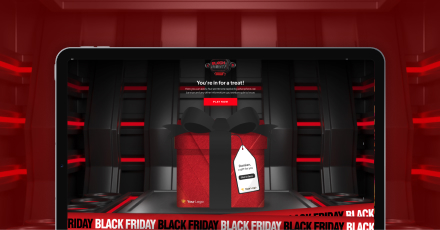
A Mystery Envelope is often better when you want the campaign to feel more selective or more premium.
For dormant customer engagement, this can work well with milestone logic. A customer has not purchased for six months, or has fallen just outside a loyalty threshold, and the brand gives them a chance to unlock a tailored return offer. The mystery format adds a sense of anticipation without relying on loud creative or heavy promotional language.
This is especially useful for brands that want freshness without becoming too overtly playful. In some categories, a spin mechanic feels right. In others, a more restrained reveal mechanic better matches the brand.
Scratch card
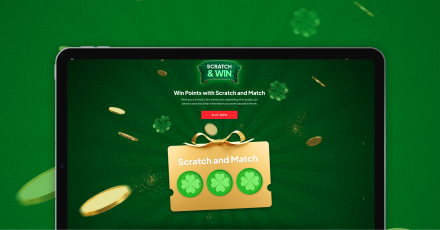
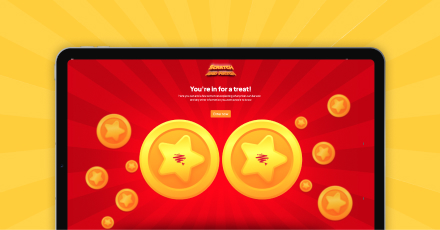
A Scratch-Off sits in a useful middle ground. It feels interactive and tactile, but still simple.
This format can be effective for repeat-purchase nudges, cart reactivation, or lapsed-loyalty audiences, where the marketer wants a quick-reveal moment tied to a clear next step. A scratch card can also work well in triggered CRM journeys because it gives the email or landing page a distinct call to action without asking the user to complete a long flow.
For many CRM teams, that balance is important. You want the campaign to feel new, but you do not want to build an entirely separate customer journey just to test a reactivation idea.
Guardrails for brand fit and margin control
Chance-based rewards only work when they are controlled.
The first guardrail is segment logic. Do not send the same mechanic to every inactive customer. Recent lapsers, one-time buyers, high-value dormant customers, and loyalty members may all need different treatments. The format can stay consistent while the reward logic changes.
The second guardrail is reward design. Curiosity is useful, but the economics still matter. For most reactivation campaigns, the goal is not to maximize headline prize value. It is to balance attention, conversion potential, and cost control. That usually means setting sensible caps, using a realistic reward mix, and deciding in advance which behaviors justify which level of incentive.
The third guardrail is brand fit. Some brands can be more overtly playful than others. That is not a problem. Chance-based does not have to mean noisy. These are controlled promotional games of chance, not gambling experiences, and the tone can be adapted to the category, customer, and campaign objective.
There is also a legal and compliance context. If you are running promotions with prizes, eligibility criteria, or region-specific terms, treat this as general information rather than legal advice. Laws and promotional rules vary by market, so your legal counsel should review the structure, disclosures, and terms before launch.
Metrics that show progress
The wrong way to measure reactivation campaigns is to ask whether the mechanic “worked” in isolation.
The better question is whether it improved the path from dormancy to renewed activity. That means looking beyond opens and clicks alone.
Start with attention metrics. Did the campaign improve open rate, click-through rate, or landing-page engagement relative to your standard win-back control? Then move to response quality. Did reactivated customers browse, redeem, purchase, or re-enter a loyalty flow?
After that, track the commercial signals that matter most for CRM teams:
- reactivation rate by dormant segment
- conversion to purchase after interaction
- average incentive cost per reactivated customer
- repeat purchase rate after the initial return
- unsubscribe or opt-out behavior
- downstream value by reward band or mechanic
That kind of measurement gives a more useful read than a single top-line result. It tells you whether the campaign earned attention, whether the attention translated into behavior, and whether the economics held up.
It also helps answer a practical question that comes up in almost every lifecycle team: was it the offer, the mechanic, the audience, or the timing? Good measurement will not solve everything, but it will stop the program from becoming a series of disconnected creative tests.
Where BeeLiked fits
BeeLiked fits here as a practical way to build branded reactivation experiences inside existing CRM programs.
For lifecycle teams, the appeal is not that chance-based rewards are new. It is that they can be deployed in a controlled, repeatable way across retention and win-back journeys. BeeLiked can support branded interactive experiences, configurable odds and rewards, and workflow-based triggers connected to existing CRM or marketing operations through general API and Zapier-supported processes, without requiring teams to turn every reactivation campaign into a custom project.
That makes it relevant for brands that want to test whether interactive incentives can improve engagement with dormant customers without overhauling the entire lifecycle program. The role is practical: help the team add a more distinctive reactivation touchpoint, keep reward logic controlled, and measure what happens next.
Where security and governance matter, we’ve got you covered as BeeLiked is ISO/IEC 27001:2022 and SOC 2 certified.
Decisions & next steps
If your current customer win-back campaigns rely on passive reminders and familiar discounts, start by reviewing where the flow loses attention. Is the problem timing, audience logic, creative sameness, or all three?
Then identify one dormant segment where curiosity could do useful work. That might be a lapsed repeat-purchase audience, a post-purchase drift segment, or customers who stopped engaging after joining a loyalty program. Choose one segment, one mechanic, and one clear next action.
Next, set the reward logic conservatively. The point is not to over-incentivize. The point is to give dormant customers a reason to notice and re-engage.
Finally, measure against a real control. Freshness is valuable, but only if it improves meaningful outcomes. The best reactivation campaigns do not just look different. They create a better path back into the customer relationship.
For CRM and lifecycle teams looking to spark more curiosity around retention, loyalty, and dormant customer engagement, BeeLiked can be a practical way to add branded, interactive incentive moments without making the program heavier than it needs to be.