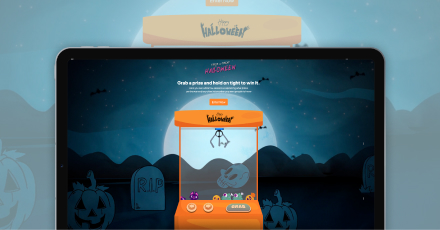
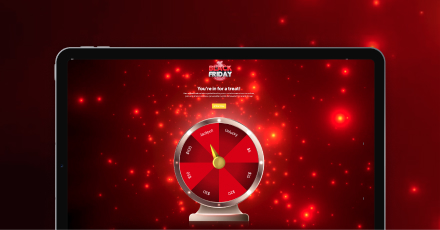
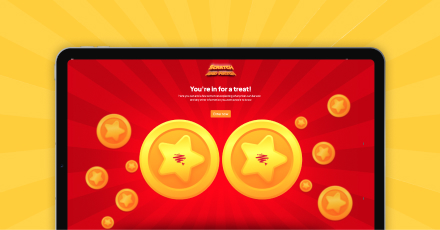
Seasonal campaign ideas often default to the same playbook: bigger discounts, louder creative, and a race to the lowest margin. But seasonal marketing does not have to be price-led to be effective. Brands can use interactive promotions to create anticipation, discovery, and participation, while protecting brand value and giving audiences a more memorable reason to engage.
60-second view
- Seasonal pressure pushes many brands toward deeper markdowns, even when margin, inventory, and brand position say otherwise.
- Consumers still care about value, but value is not always the same as the biggest discount. Experience, relevance, and timing matter too.
- Interactive mechanics can turn a routine seasonal message into a small moment of participation, which is often more attention-grabbing than another static sale banner.
- Formats such as Unwrap the Gift, Mystery Envelope, and Advent Calendar can help brands build excitement without making every campaign a margin giveaway.
- For marketing leaders, the opportunity is to design seasonal campaigns that feel rewarding, operationally manageable, and commercially sensible.
Why over-reliance on discounts hurts

The problem with heavy seasonal discounting is not that it never works. It often does work, at least in the short term. The issue is what it trains customers to expect, and what it does to your economics over time.
Once audiences learn that every seasonal moment ends in a bigger markdown, it becomes harder to earn attention without paying for it through margin. Your creative starts to look interchangeable with everyone else’s. Your email program becomes another countdown to a sale. Your paid social budget has to work harder to stand out in a market full of similar messages.
That pressure is real. In Deloitte’s 2025 Holiday Retail Survey, 89% of surveyed consumers said they planned to seek out deals, and 77% said they planned to trade down on brands and retailers. At the same time, McKinsey found that in advanced markets, more than a third of consumers had tried different brands and around 40% had switched retailers in search of better prices and discounts.
That is exactly why a pure discount battle is risky. If customers are already primed to compare prices, the deepest offer can win the click while still weakening long-term brand preference. For many brands, especially those with premium positioning, seasonal demand is not just a volume opportunity. It is also a test of how well the brand can create attention and action without looking desperate.
There is a second problem. Deep discounting is blunt. It treats every visitor the same way, whether they are loyal, new, high-intent, low-intent, or just browsing. A more interactive seasonal approach gives you room to create different levels of reward, structure curiosity, and make the journey feel less transactional.
What audiences still respond to in seasonal moments
Seasonal attention is scarce, but people still respond to moments that feel timely, participatory, and worth a few seconds of effort.
That matters because customer expectations have shifted beyond one-way brand messaging. Salesforce’s Tenth State of Marketing found that 83% of marketers recognize the move toward personalized, two-way messaging, yet only 25% are satisfied with how they use data to power those interactions. The lesson is not just about personalization technology. It is about the kind of interaction brands create. Static promotion is easy to ignore. A small, well-timed action is harder to dismiss.

In seasonal marketing, audiences tend to respond to three things.
First, curiosity. A mystery offer, a reveal mechanic, or a limited-time unlock gives people a reason to engage beyond “20% off today.” Curiosity creates a short attention span. That bridge is valuable when every channel is crowded.
Second, participation. A seasonal campaign that asks someone to tap, reveal, open, or return daily feels different from a passive banner. It turns the promotion into a moment, not just a message. That can be useful on campaign landing pages, in paid social lead capture, after an event, or during product-launch windows when the objective is to turn awareness into opt-in.
Third, controlled value. Not every seasonal reward has to be a large discount. Brands can use smaller offers, exclusive access, content, product discovery, samples, loyalty-oriented rewards, or staggered prize logic to make participation feel worthwhile without unnecessarily giving away margin.
This is the commercial reframe. The choice is not between “big discount” and “no incentive.” It is between an undifferentiated price-led promotion and a more structured value exchange.
Seasonal mechanics that drive engagement

The most useful seasonal campaign ideas usually balance simplicity for the customer with flexibility for the brand. The mechanic should feel intuitive in a second or two. The commercial logic behind it can be more sophisticated.
Gift unwrap: better for launch moments and instant seasonal attention
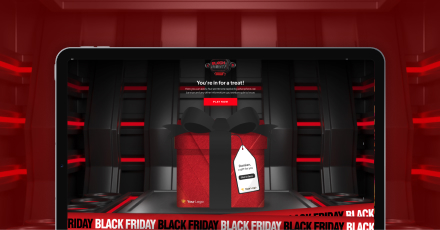
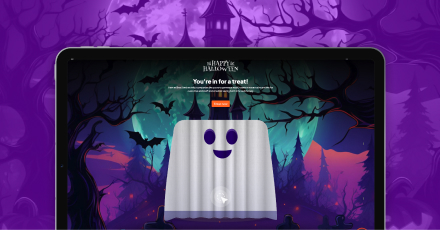
A mechanic like Unwrap the Gift works well when the goal is immediate engagement. The user understands the premise instantly. They interact, they reveal, and they get an outcome.
That makes it a strong fit for holiday promotions, product drops, campaign landing pages, paid social, or post-click experiences where you need to quickly turn initial curiosity into action. The value does not need to be a major discount. It could be early access, a smaller reward tier, a bonus entry, or a branded surprise that supports the broader campaign.
The strength of this format is that it adds theater without adding too much friction. Instead of a static hero banner shouting for attention, the campaign gives people a simple reason to participate.
Mystery reveal: useful when you want value without over-signaling discount depth
A reveal format, such as Mystery Envelope, is useful when brands want to preserve some intrigue around the offer. That matters in seasonal campaigns because it lets you build excitement without leading with the full commercial proposition in every ad and email.
For example, a brand could use a mystery mechanic to capture leads from paid social, drive opt-ins from a seasonal landing page, or re-engage existing audiences with a “see what’s inside” message. Some participants might receive an offer, others might receive content or access, and still others might unlock a lower-value reward. The experience still feels rewarding, but the campaign does not depend on a single blunt discount message.
That can help brands protect perceived value, especially in categories where constant markdowns quickly erode price integrity.
Advent-style build-up: stronger for repeat attention and seasonal habit

Not every seasonal campaign should be a one-off spike. Some work better when they build momentum over time.
An Advent Calendar approach is well-suited to this. Instead of a single reveal moment, it creates a series of smaller interactions over multiple days. That is useful when the objective is repeated visits, ongoing engagement, or a more sustained seasonal presence.
This format is particularly effective when a brand wants to combine content, product education, reward moments, and opt-in opportunities into one simple structure. A retailer might use it to highlight different product categories across a holiday period. An events brand might use it for countdown content and prize moments. A demand generation team might use it to turn a seasonal awareness push into repeat audience touchpoints rather than a single click.
Strategically, the benefit is not just excitement. It is pacing. Instead of spending all your seasonal attention budget in one burst, you create a rhythm.
Balancing excitement with operational simplicity
This is where many seasonal concepts fall apart. The idea sounds engaging, but the internal team sees risk, complexity, or extra workload and defaults back to another sale banner.
That concern is reasonable. Seasonal campaigns are rarely planned in isolation. They sit alongside paid media, CRM, ecommerce deadlines, approvals, stock constraints, customer service readiness, and legal review.
The answer is not to make the campaign more elaborate. It is to be selective.
A few principles help.
Start with one clear job. Is the campaign trying to drive lead capture, first purchase, repeat visits, event follow-up, or simple seasonal awareness? A mechanic that tries to do all of them at once usually becomes harder to execute and weaker in the market.
Keep the user interaction obvious. If the audience needs explanation, the mechanic is probably too complicated for a seasonal campaign window.
Match reward logic to margin reality. Not every participant needs the same outcome. Controlled reward distribution gives brands more room to create excitement while protecting budget.
Plan the follow-up journey before launch. A good seasonal campaign does not end at the reveal. It should connect to email nurture, retargeting, loyalty communication, or onsite conversion paths.
Treat legal and promotion-law requirements as part of the design, not an afterthought. This article is general information, not legal advice, and brands should consult their own legal counsel before launching any promotion, especially across multiple markets.
Operational simplicity is not the enemy of engagement. In most seasonal campaigns, it is what makes engagement viable at all.
Where BeeLiked fits

BeeLiked fits when a brand wants seasonal promotion ideas that feel more engaging than a static discount message, but still need to work in the real world. BeeLiked is an interactive promotions platform that helps brands create branded promotional experiences for acquisition, data capture, loyalty, and reward-led engagement, with controls around logic, rewards, and campaign setup. It is best understood as a way to create participation and excitement around a campaign, not as a coupon engine or a price-led promotion tool alone.
That matters in seasonal planning because the challenge is rarely just “how do we offer a discount?” More often, it is “how do we earn attention, capture intent, and keep the campaign commercially sensible?” BeeLiked supports that middle ground by giving brands usable formats, structured reward experiences, and a way to build seasonal journeys around participation.
Where security and governance matter, we’ve got you covered as BeeLiked is ISO/IEC 27001:2022 and SOC 2 certified.
For marketing leaders, that creates a practical option. You can build a seasonal campaign around curiosity, reveal, and repeat interactions while still maintaining brand control and operational discipline.
Decisions & next steps
For many brands, the smartest seasonal move is not a bigger discount. It is a better reason to engage.
A useful next step is to review the last two or three seasonal campaigns and ask a simple question: did the campaign win because it created interest, or because it gave away margin? If the answer is mostly price, there is probably room to test a more interactive model.
From there, define one seasonal use case that would benefit from participation rather than another static offer. That could be a landing page for holiday promotions, a paid social lead capture campaign, an event follow-up mechanic, or a product-launch attention grab.
Then choose the mechanic that fits the job. A quick unwrap works well for instant attention. A mystery reveal can add intrigue without overexposing discount depth. An advent structure helps if the goal is repeat visits and a more sustained seasonal presence.
Finally, design the campaign around measured commercial intent. Decide what the audience should do after the interaction, how value will be distributed, what success looks like, and how the experience supports brand value rather than undermining it.
For marketing leaders who want more engaging acquisition and attention campaigns built around incentivized participation, BeeLiked offers a practical way to make seasonal campaigns feel more like experiences and less like another markdown.