API incentive automation is the practice of triggering reward or engagement moments from real operational events, such as a submitted form, a registered deal, or completed training. Instead of launching campaigns manually, teams connect incentives to actions that already matter inside sales, partner, and enablement workflows.
60-second view
Triggered incentive campaigns are more effective when they occur at the right moment.
That is the real value of API incentive automation. Rather than asking operations teams to run one-off campaigns every time a partner completes onboarding or a seller hits a milestone, the incentive can be tied to the event itself. A reward moment appears because something meaningful happened, not because someone remembered to send an email.
This matters for partner and channel teams in particular. In Forrester’s 2025 view of partner ecosystems, the firm argues that B2B organizations are increasingly relying on them to meet buyer expectations, support innovation, and drive growth. As those ecosystems grow in scale and complexity, manual recognition and incentive handling become harder to sustain.
The practical takeaway is simple. If your team already cares about events such as completed forms, approved deals, completed training, or activated accounts, those same events can serve as triggers for branded interactive promotions. Done well, that makes engagement more timely, more relevant, and easier to scale.
Why timing matters in incentive design

Many incentive programs underperform for a familiar reason. The reward arrives too late, too generically, or with too much manual effort wrapped around it.
A partner registers a deal on Monday and gets recognized two weeks later. A distributor completes onboarding but hears nothing until the next monthly newsletter. A sales channel finishes required training, but the reward process depends on someone exporting a spreadsheet, checking eligibility, and pushing a campaign live by hand.
The issue is not only administrative. It changes how the incentive feels.
Recognition is stronger when it is close to the action that earned it. The tighter that connection, the easier it is for the participant to understand why they are being rewarded and what behavior the program is trying to reinforce. Delay weakens that link. So does inconsistency.
This is also part of a broader operations challenge. The official Salesforce State of Marketing report says marketers are under pressure to improve efficiency while delivering more connected and personalized experiences. That pressure applies just as clearly to channel and partner programs. Teams want the engagement to feel timely and tailored, but they do not want to create a manual process for every milestone.
That is where trigger-based workflows become useful. Tools such as Zapier’s workflow platform are built around a simple model: one event starts another action. Zapier’s own help documentation explains that webhooks can trigger workflows when a system sends a request in response to an event, which is exactly the pattern operations teams use to connect systems without waiting for batch uploads or campaign-by-campaign setup.
In other words, timing is not a cosmetic detail in incentive design. It is part of the value exchange. If the reward is meant to reinforce behavior, the system should respond while that behavior still feels current.
Trigger types that make sense in practice

The easiest way to think about triggered partner rewards is to start with events your team already tracks.
Not every workflow needs an incentive attached to it. But where the business already recognizes a meaningful action, automation can help turn that action into a more visible engagement moment.
CRM and form events
A lot of useful incentive automation starts with straightforward events in CRM or form systems.
This could be a new lead submitted by a partner, a deal registration approved, a profile completed, or a key form step finished in an onboarding flow. The point is not that every form should unlock a reward. It is that some form of CRM events represent real movement in the program and are worth acknowledging quickly.
For example, a partner who completes the final step of profile setup might be routed to a branded Mystery Envelope experience that reveals a welcome reward or access benefit. A seller who submits a qualified lead through a defined process might receive a follow-up recognition moment only after validation, rather than at the point of raw submission.
That distinction matters. Triggering from “real sales actions” does not mean rewarding noise. It means linking the incentive to the event that actually counts.
This is where simple workflow tools become commercially useful. In Zapier’s guide to triggering Zaps from webhooks, the company explains how a system event can initiate an automated workflow by sending a payload to a Zapier endpoint. For a senior operations leader, the practical implication is not technical novelty. It is that an approval in one system can initiate the next engagement step without manual handling.
A strong pattern here is approval-based triggering. Rather than rewarding every input, reward the validated event. That keeps the structure fairer and more budget-aware.
Partner portal actions
Partner portals often contain exactly the kinds of actions that incentive programs care about, but too many teams leave them disconnected from the engagement layer.
A portal login may not be enough on its own. But a first campaign activation, a completed onboarding task list, a new-quarter opt-in, or an accepted program update can all be meaningful signals. When those events trigger an immediate recognition moment, the portal starts to feel more responsive and less like an administrative archive.
This is especially relevant as partner programs get more complex. Forrester’s recent ecosystem research points to growing scale and complexity across partner models, making it harder for teams to rely solely on manual touchpoints. If you have more roles, more journeys, and more distributed ownership, workflow automation becomes less of a nice-to-have and more of an operating necessity.
A practical example would be a distributor portal where sales reps complete a quarter-start activation checklist. Once the required tasks are confirmed, the system could route eligible users into a Click to Reveal reward moment tied to the new-quarter program. That does not replace broader enablement. It simply makes the transition from action to recognition faster and more visible.
The real benefit here is consistency. The rules are defined once, the trigger is tied to a known event, and the reward logic can be controlled centrally instead of being improvised team by team.
Milestone or training completions
Training completion is one of the clearest examples of where triggered incentives can improve the experience without adding unnecessary complexity.
Many organizations already track completion in an LMS, partner portal, or internal enablement stack. The challenge is what happens next. If recognition is delayed, inconsistent, or handled manually, the sense of progress disappears quickly.
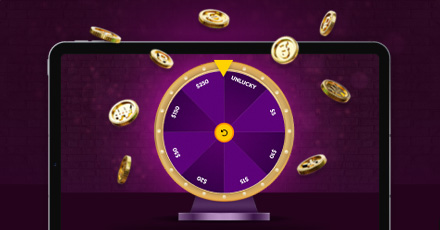
This is a good place for a Digital Spin Wheel or similar branded reward moment, provided the reward structure is sensible and the event itself is worth reinforcing. The mechanic is not the strategy. The strategy is using a timely, controlled interaction to acknowledge the milestone and encourage the next action.
That next action matters. A training completion trigger should ideally lead somewhere commercially useful. It might unlock a next-stage module, create a light-touch reward, encourage portal return, or support a broader onboarding path. The automation works best when it is part of a designed journey, not just an isolated prize drop.
This is also where operations teams need to stay realistic. Not every completion event warrants the same value. Core onboarding, certification milestones, and high-priority enablement tasks may justify stronger recognition than routine micro-learning. Automation makes this easier because the logic can reflect priority levels instead of treating all milestones equally.
Architecture and governance basics

Senior leaders do not need to see the API schema to make good decisions here, but they do need a clear model of how the workflow works.
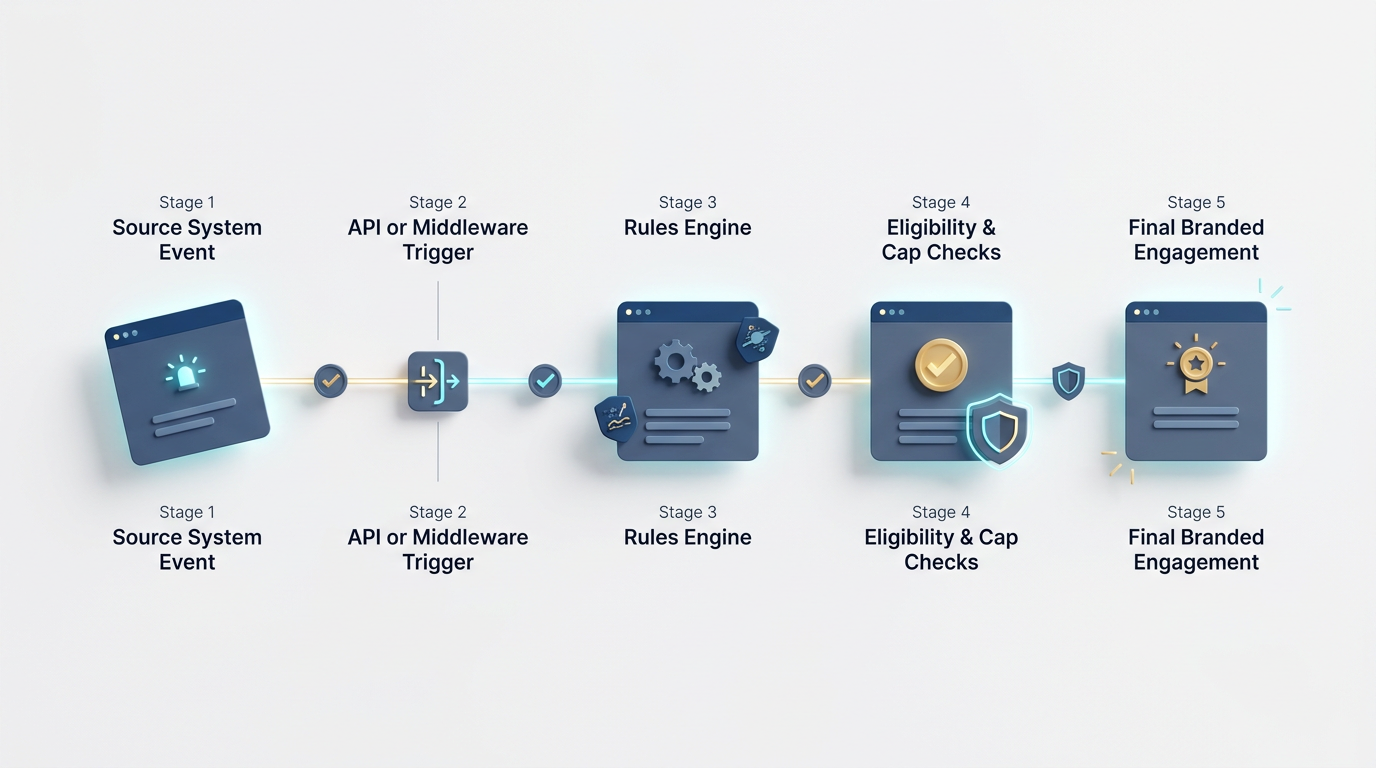
At a high level, the pattern is simple. A source system records an event. That event triggers a workflow through API or middleware logic. The workflow checks the relevant rules, such as eligibility, role, frequency, or reward caps. If the conditions are met, the participant is routed into the appropriate reward or engagement experience.
That sounds tidy on paper, but governance is what makes it work in practice.
First, someone needs to own the trigger definitions. Which events count? Which do not? What gets rewarded only once, and what can recur?
Second, someone needs to own reward exposure. Even well-designed triggered partner rewards can become messy if the business does not define caps, budget controls, or expiry logic early enough.
Third, someone needs to own exceptions. What happens when data is missing, an event fires twice, a submission is reversed, or a participant should be suppressed from a campaign?
The BeeLiked rulebook is clear that automation in this context means triggers, workflows, and rules, not generic “AI magic.” It also makes clear that BeeLiked should not be positioned as a full sales compensation platform. That is an important boundary. The goal is not to rebuild your entire incentive system within a single promotional tool. The goal is to connect engagement moments to the operational signals your business already trusts.
There is also a compliance point. BeeLiked’s approved game formats used here are chance-based in functional terms, with outcomes governed by configured odds and logic rather than real-world skill. These are marketing promotions, not gambling products, and clients remain responsible for legal compliance in their own jurisdictions. Any promotion-law considerations here are general information only, not legal advice, and brands should consult their own legal counsel before launch.
Measurement and operational ownership
A triggered incentive program should be measured on more than the volume of rewards issued.
The first question is whether the workflow is firing accurately. Are events being captured correctly? Are the right people receiving the right experience? Are duplicates and edge cases under control?
The second question is whether the timing is improving engagement. Are partners returning faster after onboarding? Are training completions leading to the next intended action? Are approved submissions turning into a more active response pattern than the previous manual process delivered?
The third question is whether the program is operationally sustainable. Automation is only useful if the business can trust it. That means clear ownership between ops, marketing, partner teams, and any system administrators involved.
A good operating model usually has one team owning workflow design, one owning reward policy, and one owning performance review. Those may sit in different functions, but the rules should not be fragmented. Otherwise, the program starts behaving differently across regions, partner groups, or business units.
This is where many automation discussions go wrong. Teams focus on what can be connected, not what should be governed. The workflow itself may be technically simple. The harder part is deciding which behaviors deserve recognition and how much control the business needs around them.
Where BeeLiked fits
BeeLiked serves as an engagement platform that can sit within a broader operational workflow, rather than as a replacement for CRM, partner management, or enablement systems.
That is important in this topic because the value does not come from “having an API” in isolation. It comes from using BeeLiked to deliver branded, controlled incentive moments when another system records a meaningful event. According to the BeeLiked rulebook, BeeLiked can participate in journeys orchestrated by external systems such as CRM, CDP, Zapier, or custom API workflows, and can support automated journeys triggered by events such as renewal, onboarding, purchase, or milestone completion.
For partner and channel teams, that makes BeeLiked relevant where the program needs branded engagement, controlled rewards, access rules, and campaign-level reporting, while the core operational data continues to live in the systems of record that already run the business. That could include onboarding, deal registration, training, approval flows, or quarter-start activation.
If security review is part of the buying process, then we’ve got you covered, as BeeLiked is ISO/IEC 27001:2022 and SOC 2 certified.
Decisions & next steps
The fastest way to make incentive programs more useful is not to add more campaigns. It is to attach them to the actions that already matter.
For most revenue operations, partner operations, or enablement leaders, the practical next step is to identify three to five events that already carry business value. Then decide which of those should trigger recognition, what the eligibility rules should be, and where the workflow should be owned.
Start small. A single onboarding completion, approved deal registration, or training milestone is often enough to prove the operating model. Once the trigger logic, controls, and reporting are working cleanly, the program can expand into broader channel engagement automation.
For partner and channel teams that want to automate branded incentive campaigns and stay top of mind with partners or sales channels, BeeLiked offers a practical way to connect reward moments to real operational events without turning the whole program into a manual campaign engine.