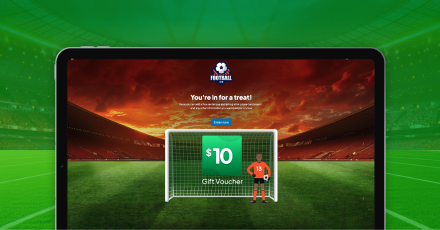
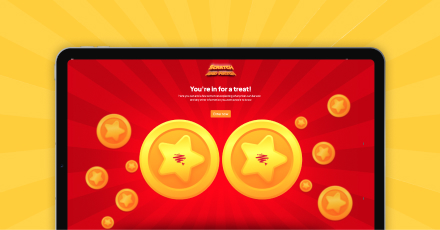
nstant-win marketing uses immediate-reward moments to prompt attention and action. In peak season, when standard messages blur together, that immediacy can give brands a clearer reason to stop the scroll, earn the click, and move audiences into participation.
60-second view
Peak season is not just crowded. It is fatiguing. Audiences see more offers, more reminders, and more generic festive creatives, which makes it harder for any single campaign to stand out.
That is where instant-win mechanics can help. They introduce a simple value exchange: engage now, find out now. Used well, they give people a reason to act in the moment rather than postpone, ignore, or skim past the message.
For senior marketing leaders, the practical value is not novelty for its own sake. It is the ability to turn awareness into active participation through branded interactive promotions that feel timely, measurable, and commercially useful. The strongest programs stay tightly connected to campaign goals, reward logic, and fulfillment reality, rather than treating gamification as surface-level decoration.
Why noise rises during peak periods
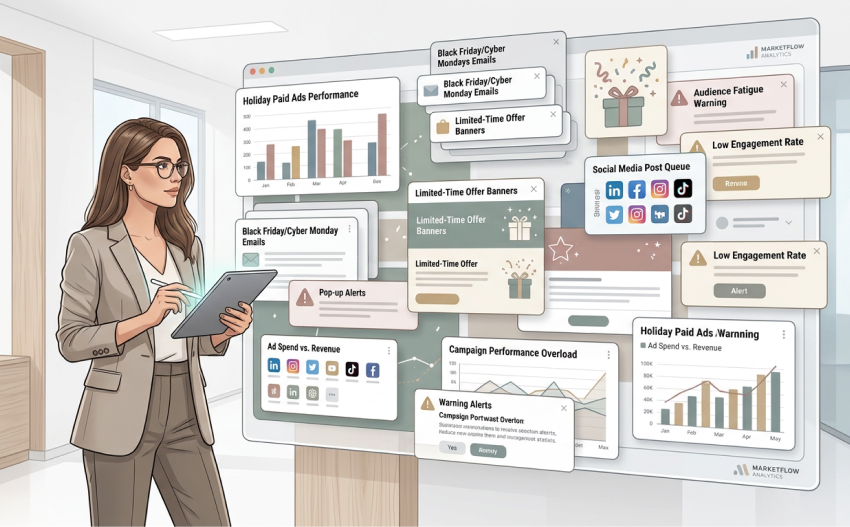
Peak-season campaigns operate in a harsher environment than many teams admit. More brands are competing for the same limited attention, inboxes are fuller, paid media costs often rise, and even strong creative can get absorbed into a general sense of promotional sameness.
The issue is not simply volume. It is compression. During promotional peaks, brands cluster around the same windows, claims, and visual language. “Limited-time offer,” “holiday deal,” and “don’t miss out” are everywhere. The result is that awareness becomes harder to earn, even when the media plan is sound.
That pressure is visible in broader marketing research. The official Salesforce State of Marketing report says marketers are under pressure to improve efficiency while delivering more connected and personalized experiences, based on research with more than 4,500 marketing leaders. The official HubSpot State of Marketing for 2026 also frames the current environment around crowded markets, trust, and the need for clearer brand distinctiveness. Those are not abstract concerns. They show up very directly in peak-season engagement performance.
For brand teams, that creates a familiar problem. Passive creative may still look polished, but polish alone does not always produce a response. A well-designed display ad or seasonal landing page can signal brand quality, yet still fail to create a strong enough reason to act now. When attention is scarce, immediacy matters more.
That is why instant win marketing tends to become more relevant during noisy periods. It does not ask the audience to admire the message and come back later. It gives them a concrete prompt with an immediate outcome.
What instant payoff changes in user behavior
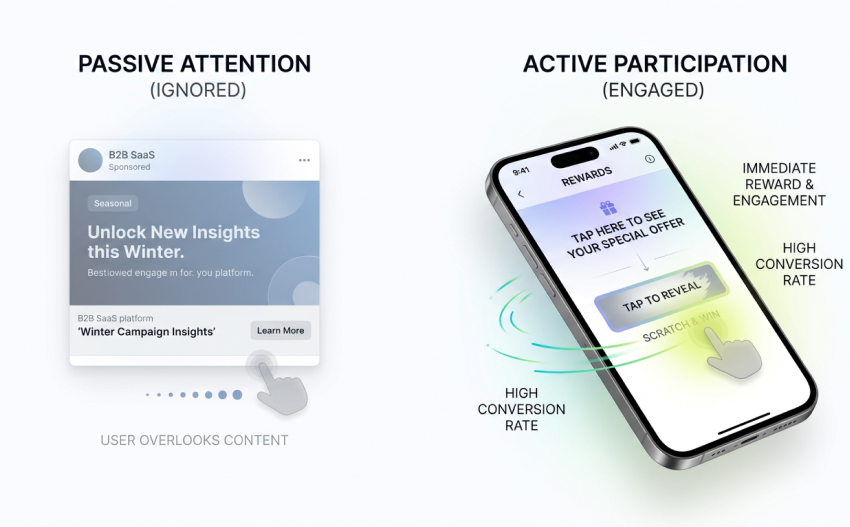
The biggest change instant-win mechanics create is not excitement. It is commitment.
A conventional awareness ad often asks for low-energy attention: notice this, remember this, maybe return later. An instant-win interaction changes the behavioral contract. The user is asked to do something specific now because there is an immediate possibility of payoff.
That matters because action is more valuable than passive notice. Even a small interaction creates a stronger signal of intent than an impression alone. It also gives the brand a more memorable moment to build around.
In practical terms, instant payoff changes three things.
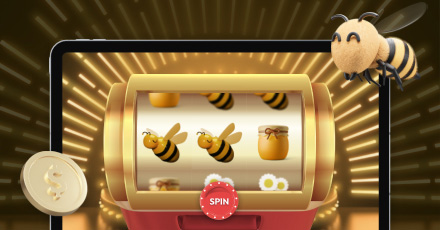
First, it reduces hesitation. The audience understands the exchange quickly. Spin, scratch, grab, reveal. The mechanism is easy to grasp, and the outcome is not deferred.
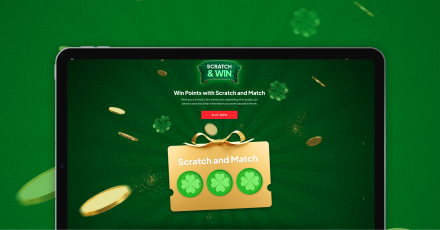
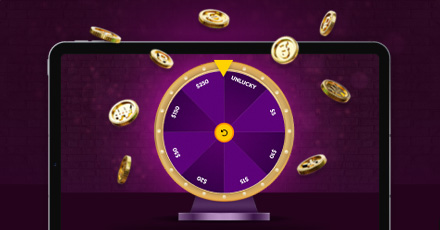
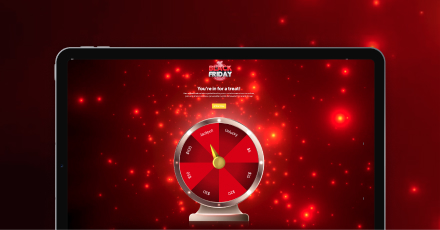
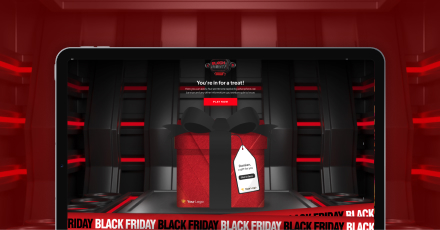
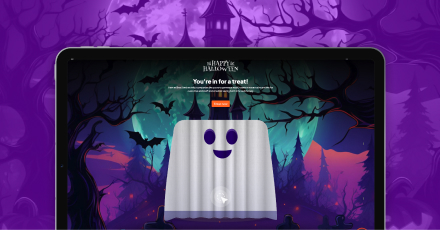
Second, it creates novelty in places where standard calls to action have become invisible. A well-branded Digital Spin Wheel or Scratch-Off mechanic gives the audience something to do, not just something to read.
Third, it gives the campaign a clearer emotional edge. That does not mean overhyping prizes or turning the brand into a game show. It means using immediacy to make participation feel worthwhile.
This aligns with the current marketing direction more broadly. The official HubSpot marketing trends article highlights the growing importance of standing out through greater relevance and differentiated execution, rather than relying on more of the same content. In a high-noise environment, instant-win mechanics are one practical way to introduce that difference without abandoning brand discipline.
There is also a channel advantage. Immediate-payoff mechanics are naturally suited to mobile behavior, where users decide very quickly whether something is worth engaging with. A landing page, paid-social unit, email click-through destination, or event follow-up flow can all benefit from a mechanic that turns fleeting attention into a defined action.
When instant-win works best
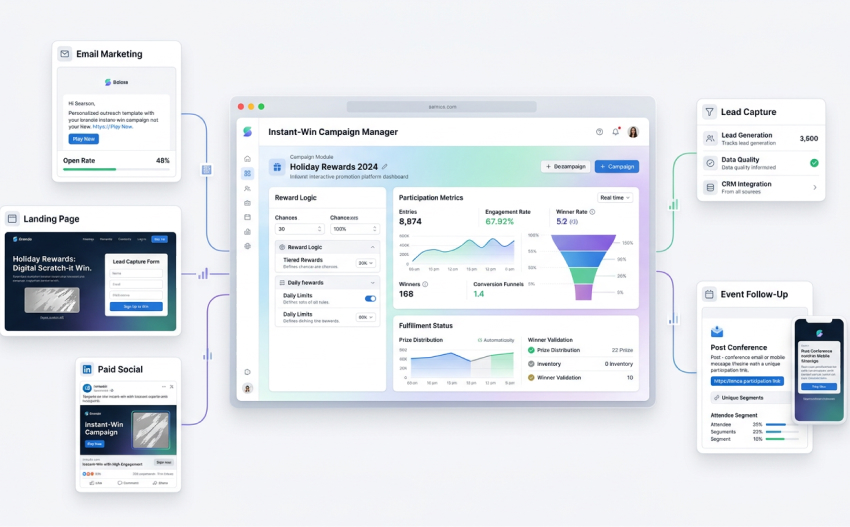
Instant-win campaigns are most effective when the objective is clear, and the participation journey is short. They are not a solution for every marketing job. They are best used where immediacy supports the commercial goal.
Awareness
Awareness campaigns often struggle during peak season because the audience sees the message before it has any reason to care. An instant-win mechanic can change that by creating a more active first encounter.
A product-launch campaign is a good example. Instead of sending traffic to a standard “discover the range” page, a brand might use a branded instant-win moment to introduce the theme, offer a small incentive, and move users to browse or opt in. The prize does not need to be extravagant. The value comes from making the first touch more participatory.
This is particularly useful when the brand wants to be remembered without relying entirely on discount language. A mechanic-led experience can give the campaign sharper shape and improve recall simply because the user did something.
Email click-through
Peak-season email programs face a blunt problem: inbox competition. Even strong subject lines can struggle when every brand is increasing cadence.
Instant-win marketing can help by giving the click a clearer purpose. “See the collection” is fine. “Open to play for today’s instant reward” is a more active proposition. That does not guarantee performance, and it should not be overused, but it can be a more compelling reason to leave the inbox and engage with the campaign environment.
The value here is not just in click-through. It is in what happens after the click. A branded instant-win experience can reinforce the creative idea, capture attention for longer, and create a cleaner bridge into the next action, whether that is product discovery, voucher redemption, loyalty sign-up, or remarketing consent.
Lead capture and entry flows
This is where a lot of gamified marketing programs either work well or go wrong.
They work well when the mechanic improves the exchange. A user is more likely to complete a form or opt-in flow when the reason is immediate and tangible. They go wrong when the brand adds a game mechanic that feels disconnected from the offer, the audience, or the follow-up journey.
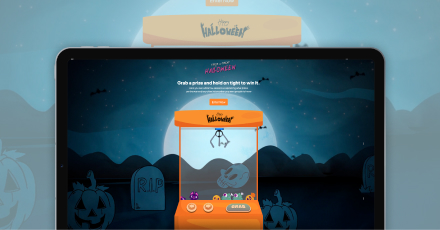
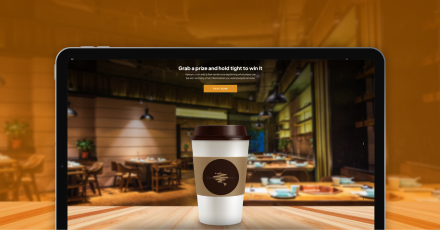
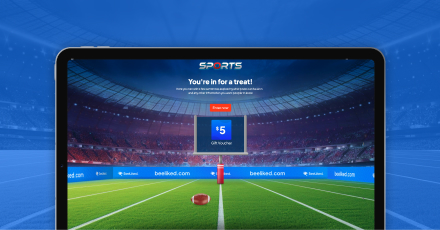
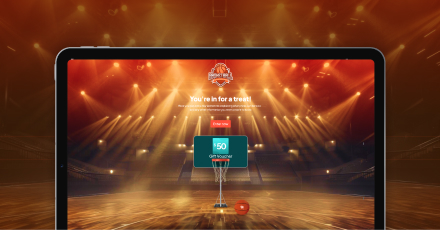
A Grabber mechanic, for example, can be effective for lead capture when the format matches the campaign’s tone and the reward logic is easy to understand. The point is not to maximize spectacle. It is to make the entry feel engaging enough that the user does not bounce before completing the action.
Event follow-up is another strong use case. A trade show, sampling activation, or seasonal pop-up often generates warm but fragile interest. An instant-win follow-up can convert that weak intent into a clearer next step, whether that means data capture, content sign-up, or a first-purchase incentive.
Designing for brand fit, fairness, and fulfillment practicality
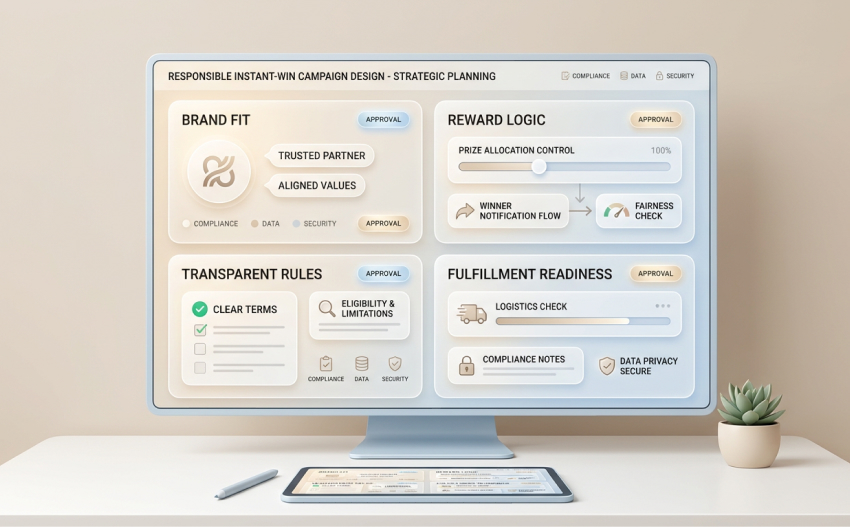
The mechanics are only half the job. The harder question is whether the experience fits the brand and can be run responsibly.
Brand fit comes first. Not every campaign should feel playful in the same way. A premium retailer, an FMCG launch, and a financial services awareness campaign will need different creative treatment, reward framing, and tone. The mechanic should support the campaign idea, not overpower it.
That means senior marketers should look beyond the novelty layer and ask more practical questions. Does the interaction reflect the brand’s level of polish? Does it make the offer easier to understand? Does it lead naturally into the next customer action? If the answer is no, the campaign may generate clicks without building much value.
Fairness matters too. Instant-win experiences need transparent rules, a clear explanation of how participation works, and sensible reward structures. The brand should know in advance how many prizes are available, how the odds are configured, how winners are notified, and what fulfillment process supports the campaign. These are operational questions, but they shape customer trust.
Fulfillment practicality is where many peak-season ideas become less attractive under scrutiny. A flashy campaign is less useful if reward distribution is slow, stock is uncertain, or internal teams cannot support the redemption flow. The commercial test is simple: can the campaign be delivered cleanly at the speed the audience expects?
The BeeLiked rulebook is clear that these are marketing promotions, not gambling products, and that clients remain responsible for legal compliance in their own jurisdictions. Any promotion-law considerations here are general information only, not legal advice, and brands should consult their own legal counsel before launch.
That is especially important in peak season, when timelines shorten, and the temptation to launch quickly increases. Speed matters, but it should not come at the cost of clarity, fairness, or fulfillment readiness.
Where BeeLiked fits
BeeLiked fits when a marketing team wants to launch branded instant-win experiences across channels without reducing the campaign to a generic prize mechanic. The role is practical: help brands deploy interactive formats that support awareness, click-through, lead capture, and broader audience engagement journeys while staying aligned with brand and campaign logic.
That includes a range of promotion formats and controls described in the BeeLiked rulebook, with positioning centered on branded engagement, reward logic, automation, and measurable participation rather than hype. For peak-season attention campaigns, that matters because the objective is rarely just to entertain. It is meant to turn a noisy moment into a cleaner, more active exchange between the brand and the audience.
For teams that need assurance on security reviews, we’ve got you covered as BeeLiked is ISO/IEC 27001:2022 and SOC 2 certified.
Decisions & next steps
The real question in peak season is not whether to be louder. It is whether to be more actionable.
If standard messages are starting to flatten out, instant-win marketing is worth considering when the campaign needs immediacy, clearer participation, and a more tangible reason to engage now. That is often most useful in awareness pushes, email click-through programs, product-launch moments, event follow-up, and opt-in journeys where the audience needs a stronger prompt than passive creative alone.
The disciplined version of this strategy is straightforward. Start with one objective. Match the mechanic to the brand and the channel. Keep the reward logic simple. Check the operational reality of fulfillment before launch. Make sure the promotion structure is clear and fair. Then judge success not just by impressions, but by the quality of participation the campaign creates.
For marketing leaders who want more engaging acquisition and attention campaigns built around incentivized participation, BeeLiked offers a practical route into branded instant-win experiences that can sit inside a wider peak-season program rather than acting as a disconnected stunt.