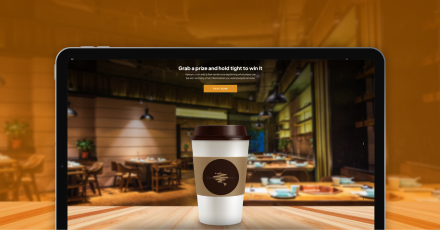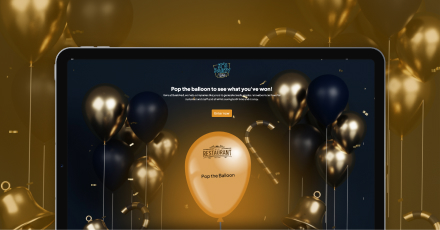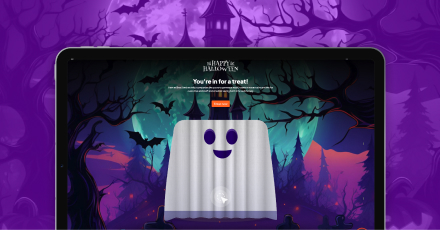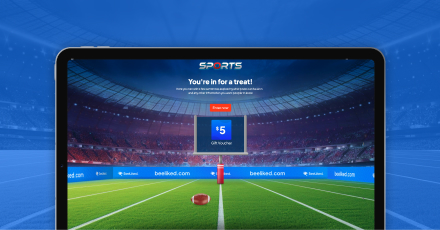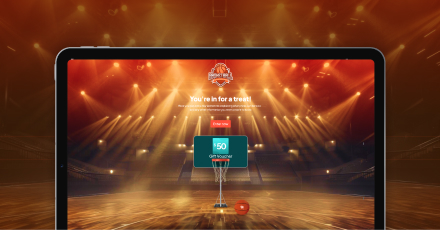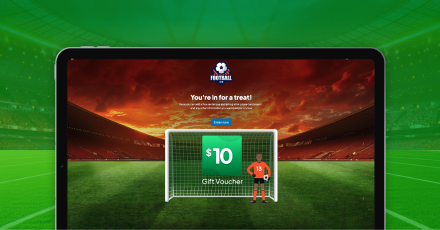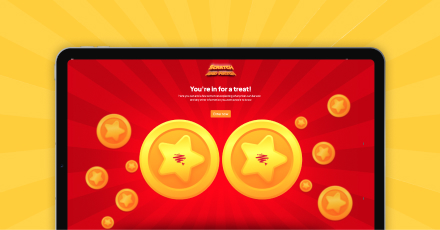
Loyalty incentives are the offers, rewards, and moments brands use to encourage repeat engagement. A value exchange in loyalty means the customer does something meaningful, pays attention, shares a preference, completes an action, or participates in an experience, and in return receives a reward that feels relevant and earned.
Too many loyalty programs still rely on the same blunt tool: another voucher. That can drive a short-term response, but it rarely builds distinctiveness on its own. Over time, generic discounts start to look interchangeable, especially in inboxes and apps already crowded with competing offers.
60-second view
- Loyalty incentives lose impact when they become predictable, generic, and too easy to ignore.
- Customers respond better when rewards feel relevant, timely, and tied to a small act of participation rather than dropped in as another blanket discount.
- A value exchange can increase perceived value because the reward feels earned rather than merely issued.
- Well-designed interactive promotions give CRM teams more ways to vary loyalty moments across win-back, post-purchase, and milestone journeys.
- For retention teams under pressure to drive repeat engagement without training customers to wait for the next coupon, that flexibility matters.
Why standard vouchers lose impact over time
Most CRM teams know the pattern. A discount code works, then works a little less, then needs to get stronger or more frequent to cut through. The offer has not necessarily become bad. It has become familiar.
That is the real problem with voucher-heavy loyalty incentives. They are easy to deploy, simple to understand, and measurable at the point of redemption. But they also train customers to see the brand relationship in purely transactional terms. The next email becomes a price check, not a reason to engage.
This matters more now because customer expectations have moved on. In Salesforce research, 73% of customers say they expect better personalization as technology advances, and 80% say the experience a company provides is as important as its products and services. When brands keep sending the same generic incentive, they are not just leaving performance on the table. They are also signaling that the relationship is thin and one-size-fits-all. Salesforce customer expectations research
There is also a practical loyalty issue here. Discounts can be useful, but they are not the whole answer. Forrester notes that consumers still value financial rewards, yet they also want loyalty programs to make them feel special through things like exclusive access and differentiated treatment. That is an important distinction. Monetary value still matters, but experience and recognition matter too. Forrester on what consumers want from loyalty programs
A generic voucher rarely delivers that feeling on its own. It can stimulate a purchase. It does less to create memory, anticipation, or emotional weight.
What customers respond to instead: relevance, immediacy, participation
Customers do not need every loyalty moment to be elaborate. They do need it to feel intentional.
The strongest loyalty incentives usually combine three things. First, relevance: the reward or experience makes sense for the customer, segment, or moment. Second, immediacy: the benefit is clear now, not buried in an abstract future promise. Third, participation: the customer does something small that turns the reward into an exchange.
That third point is where many retention strategies still undershoot. Participation changes the feel of the reward. Instead of passively receiving a coupon, the customer opens, reveals, chooses, or plays. The underlying economics may be similar, but the perceived value often changes because the reward becomes an event rather than a code.
This lines up with broader shifts in marketing. In Salesforce’s latest State of Marketing, based on nearly 4,500 marketing leaders, 83% of marketers recognize a shift toward personalized, two-way messaging. The direction of travel is clear. Audiences are less responsive to one-way promotional broadcasting and more responsive to experiences that feel tailored and active. Salesforce State of Marketing
McKinsey has made a similar point from the customer side: 71% of consumers expect personalized interactions, and 76% get frustrated when that does not happen. For loyalty teams, that does not automatically mean more complex loyalty mechanics. It means designing reward moments that feel more connected to the individual and the context. McKinsey on the next frontier of personalized marketing
A value exchange does exactly that. It asks for a small amount of attention or action, then returns a reward that feels more immediate and memorable.
Where interactive promotions fit in the loyalty journey
The strongest use of loyalty incentives is not to replace your whole retention program with novelty. It is to place interactive moments where they can add energy, variety, and perceived value to an existing CRM journey.
Post-purchase delight
A customer has just completed an order. This is often where brands send the standard “thank you, here’s 10% off next time” message. It is functional, but forgettable.
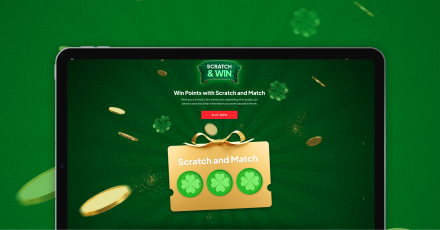
A more effective approach can be to turn that post-purchase message into a light-touch reward experience. For example, a Scratch-Off can reveal a surprise bonus, perk, or next-purchase incentive. The commercial value can still be controlled, but the experience feels less like an automatic markdown and more like a thank-you moment.
That distinction matters because post-purchase messaging is one of the few moments when the customer is already engaged. Treating it as a flat voucher drop misses a natural chance to strengthen memory and sentiment.
Anniversary and milestone moments
Milestones are where generic discounts feel particularly lazy. If a customer hits a one-year anniversary, fifth purchase, or loyalty tier threshold, the reward should reflect the significance of the moment.
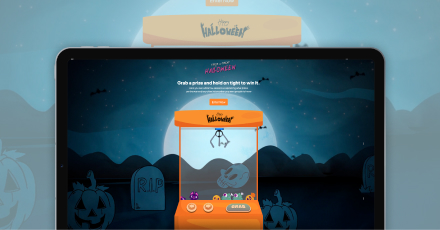
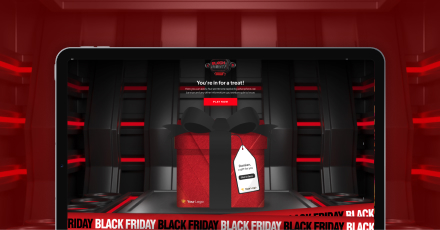
This is where a Mystery Envelope or similar mechanic can work well. It introduces anticipation without making the brand look gimmicky. The customer is not just being issued a benefit. They are being recognized through a branded interaction that can still sit neatly within an email, an app, or a private loyalty journey.
For CRM teams, milestone moments are valuable because they help make the program feel alive. They break the monotony of static points, balances, and periodic coupons.
Re-engagement nudges
Dormant customers are especially hard to win back with a plain voucher, because every brand is trying the same thing. The inbox is full of “We miss you,” plus a discount.
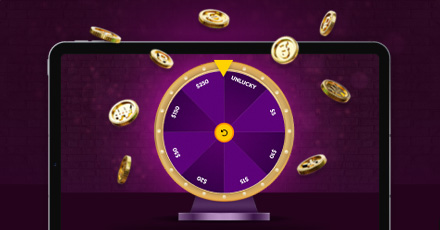
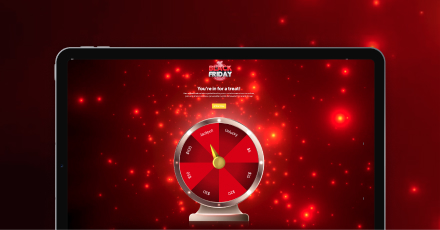
A Digital Spin Wheel can give that re-engagement message more stopping power. More importantly, it changes the emotional frame. Instead of the brand simply conceding margin to get attention, it offers a small moment of participation tied to a potential reward.
That does not mean every win-back should be gamified. It means retention teams have a broader set of tools for moments when standard discounting fades into the background.
Choosing the right mechanic for the audience and reward
Not every interactive format suits every audience, and not every loyalty moment needs surprise.
The better question is this: what should the customer feel at this stage of the relationship?
If the goal is instant delight after purchase, a reveal mechanic can work because it is fast and low-friction. If the goal is reactivation, a more visible mechanic can help earn attention in a crowded channel. If the goal is milestone recognition, the reward experience should feel slightly more premium or distinctive.
The reward itself also matters. A high-value benefit does not need heavy theatrics. A low- to mid-value benefit may need a stronger presentation to avoid feeling disposable. That is where value exchange marketing becomes commercially useful. It helps brands increase the perceived value of moderate incentives without defaulting to deeper discounting.
This is also where restraint matters. A loyalty program should not feel random or noisy. Interactive moments work best when they are used selectively, tied to recognizable stages in the journey, and designed to match the brand rather than overpower it.
For legal and promotion-law considerations, teams should treat structure, reward rules, eligibility, and disclosures carefully. The right approach will depend on the markets involved and the campaign design. This is general information, not legal advice, and brands should consult their own legal counsel before launching any promotion or rewards program.
How to measure value beyond redemption
Redemption rate still matters. It is just not enough on its own.
If you only measure whether a voucher was used, you miss the broader question: did the incentive create a better loyalty moment? In practice, CRM and retention teams should consider a broader set of signals.
Start with engagement. Did the customer open, click, interact with, or complete the experience at a higher rate than with a comparable static offer? Then look at timing. Did the incentive prompt a repeat purchase or a reactivation event? Next, look at behavior quality. Did the customer simply redeem, or did they move deeper into the relationship by completing a second purchase, updating preferences, or re-entering an active lifecycle stream?
There is also strategic value in variation. One of the quiet advantages of gamified loyalty incentives is that they give teams more room to test different reward structures and experience designs. A retention program built entirely around flat coupons is easy to report on, but harder to evolve. A program with a wider mix of reward moments gives teams more to optimize.
That is especially relevant as personalization expectations keep rising. HubSpot’s 2025 marketing trends report notes that consumers increasingly expect faster, more personalized responses, and marketers are leaning harder into tailored content and experiences. Loyalty teams are dealing with the same pressure inside CRM. Static incentives are simple, but simplicity should not become sameness. HubSpot marketing trends
Where BeeLiked fits
BeeLiked fits as a platform for branded interactive promotions used inside CRM and loyalty journeys. It is not a replacement for a full loyalty platform. It is a way for retention and lifecycle teams to add interactive reward moments to existing programs, campaigns, and triggered communications.
That can include post-purchase incentives, milestone recognition, win-back moments, or private loyalty campaigns designed for specific segments. The practical value is not just in making incentives look more interesting. It is about giving teams more control over how rewards are presented, when they appear, and how different experiences are deployed across the journey.
For brands that need confidence in security and governance as part of that process, BeeLiked is ISO/IEC 27001:2022 and SOC 2 certified.
The core point is simple. If your loyalty strategy relies too heavily on repeating the same voucher mechanic, BeeLiked gives you a way to introduce more varied, branded, and measurable reward experiences without rebuilding your whole retention stack.
Decisions & next steps
If your current loyalty incentives are starting to blur together, the answer is not automatically “offer a bigger discount.” It is often necessary to improve the value exchange.
Start by identifying where generic vouchers are doing necessary work and where they are used out of habit. Then map the loyalty journey for moments where participation could increase perceived value, such as after purchase, at milestones, or during reactivation. Choose one use case where an interactive reward moment could replace a flat coupon without adding unnecessary complexity. Measure the result against a static control where possible, and judge it on engagement quality as well as redemption.
For CRM and lifecycle teams, that is the practical opportunity. Not to abandon incentives, but to make them feel more earned, more memorable, and more useful to optimize over time.
BeeLiked can support that shift with branded interactive incentives for retention, loyalty, and win-back journeys, helping teams add variety to reward experiences while keeping the broader loyalty strategy grounded and commercially sensible.